
Yard Drainage & Grading Solutions in Angier, NC
Yard drainage solutions in NC are about more than getting rid of an eyesore, because standing water quietly does real damage. It drowns grass, breeds mosquitoes and lawn fungus, undermines foundations, and turns half your yard into a no-go zone after every rain. Central North Carolina is especially prone to it, since our tight red clay soaks up water slowly, so storms leave puddles that linger for days instead of soaking away. Will Do Lawn Care has diagnosed and fixed drainage problems across Angier and the surrounding counties since 2011.
Yard drainage solutions in NC are about more than getting rid of an eyesore, because standing water quietly does real damage. It drowns grass, breeds mosquitoes and lawn fungus, undermines foundations, and turns half your yard into a no-go zone after every rain. Central North Carolina is especially prone to it, since our tight red clay soaks up water slowly, so storms leave puddles that linger for days instead of soaking away. Will Do Lawn Care has diagnosed and fixed drainage problems across Angier and the surrounding counties since 2011.
Drainage work is really about following the water, and that is what separates a fix that lasts from a trench that fills up and fails. We look at where the water comes from, where it collects, and where it actually needs to go, then choose the right combination of grading, drains, and downspout routing to move it there. A generic dig-a-trench approach that ignores the actual water path rarely solves the real problem, and sometimes just relocates it.
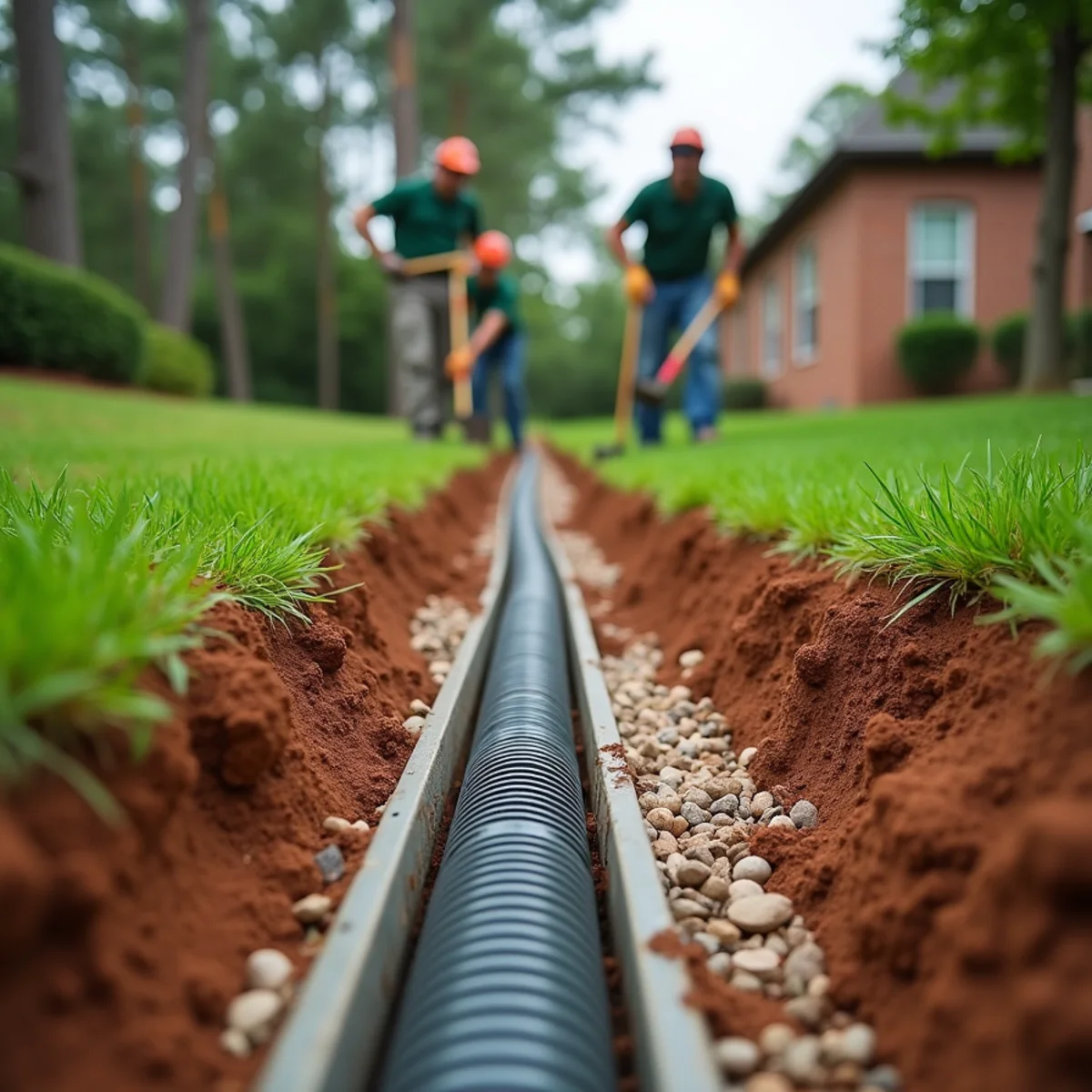
Every wet yard is a little different, which is why we diagnose before we dig. Sometimes the whole fix is redirecting downspouts that are dumping roof water right onto the lawn. Sometimes it is regrading a low spot so water sheds instead of pooling. Sometimes it takes a proper french drain to carry subsurface water out to daylight. Often it is a combination, and matching the solution to the cause is what keeps the problem from coming back the next time it storms.
Drainage problems we solve
If any of these sound like your yard, there is a fix for it:
Standing water and soggy spots
Areas that stay wet for days after rain kill the turf and stay unusable, and on our clay they can linger far longer than homeowners expect. We give that water somewhere to go so the ground can dry out and grow grass again.
Water against the foundation
Poor grading and downspouts dumping right at the house send water straight toward the foundation, which is a problem you do not want to ignore. We redirect that water away from the structure.
Erosion and washouts
Bare, eroding slopes and channels where water has carved its own path get regraded and stabilized so you stop losing soil and mulch every time it rains hard.
Downspouts flooding the lawn
Roof water dumped onto the grass creates a permanent wet, mucky spot. We route that water underground and out to daylight instead of onto the lawn where it pools.
A yard you cannot mow after rain
When part of the yard stays too wet to mow for days after every storm, ruts and scalping follow. Correcting the drainage makes the whole lawn usable and mowable on a normal schedule.
New-construction ponding
Aggressive grading and heavy compaction during a build routinely create new low spots that pond in a home first year. We regrade and drain them so the new yard actually sheds water.
How we fix yard drainage
We trace the water first, then install the right fix and restore the lawn over it:
- 1
Diagnose the water path
We assess the grade, the soil, the downspouts, and exactly where water enters and pools, so we are fixing the real cause instead of guessing at symptoms.
- 2
Recommend the right fix
French drain, surface drain, swale, regrading, downspout extension, or a combination, matched to what your yard actually needs rather than a one-size approach.
- 3
Install the solution
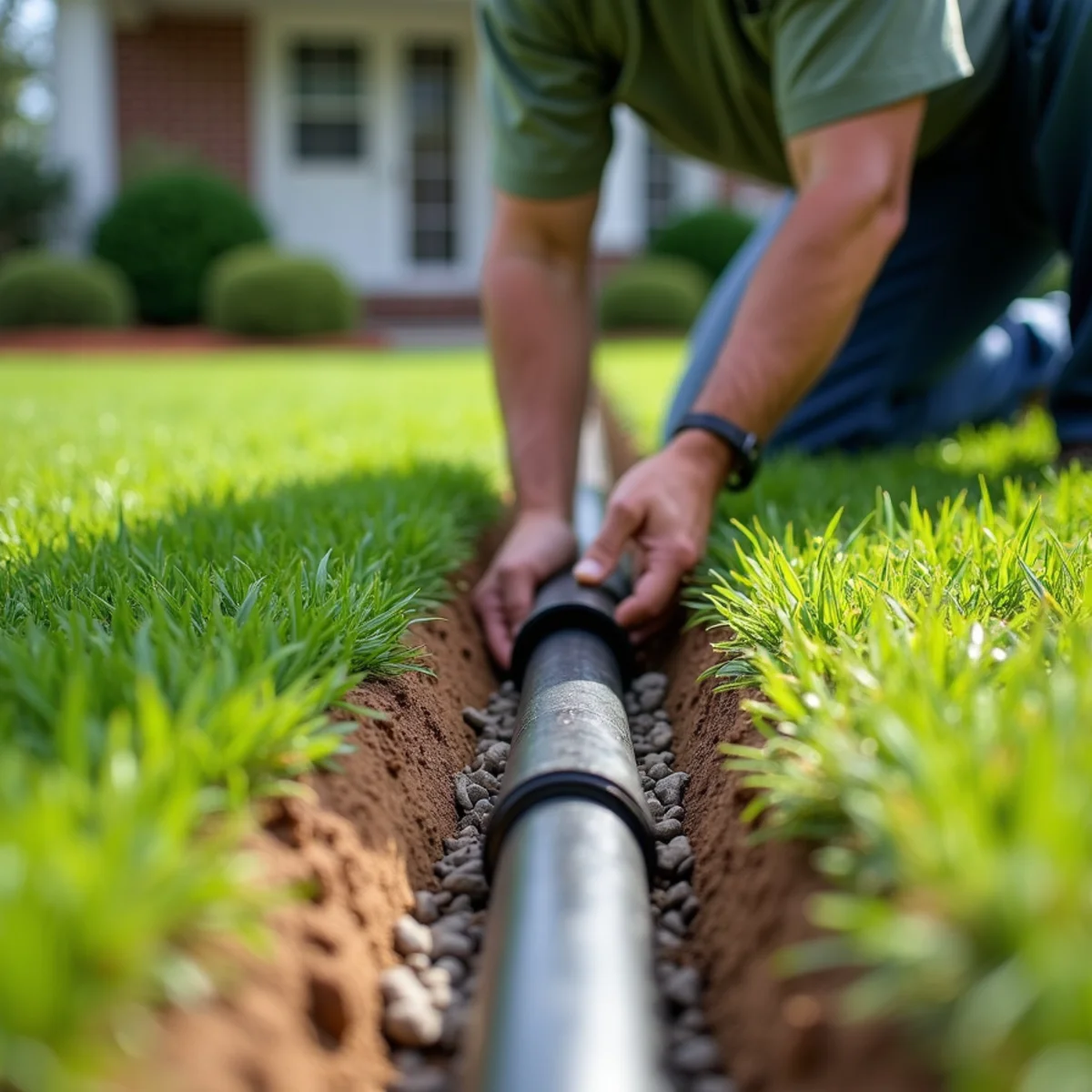
We dig, install proper drain pipe and gravel or reshape the grade, and route the water to a safe outlet where it can leave the property without causing a new problem.
- 4
Restore the surface
Trenches and regraded areas are backfilled and then seeded or sodded, so the lawn recovers and the fix disappears into the yard instead of leaving a scar.
- 5
Confirm the flow
We check that water actually moves where it should, because a drain that looks right but does not carry water is not a fix at all.
- 6
Advise on the long term
We tell you how to keep the outlet clear and the grade holding, so the solution keeps working season after season.
Why NC clay makes drainage tricky
Piedmont clay does not absorb water quickly, so what would soak away in a few minutes in sandy soil sits on the surface here for days. That single fact changes the whole approach. Surface solutions, grading and swales that move water across the top of the ground, are often just as important as buried drains, because water that cannot soak in has to be given a path to run off. Relying only on an underground drain in dense clay can leave you with a slow, still-soggy yard.
New-construction lots make it worse. During the build, the ground gets aggressively graded and compacted by heavy equipment, and the finish grading is often done more for the builder schedule than for how water actually needs to move once you live there. The result is the flood of first-year drainage complaints we see across new subdivisions. Correcting a new lot usually means undoing some of that compaction and re-establishing a grade that sheds water away from the house.
Drainage and a healthy lawn go together
Because drainage and lawn health are so tied together, we frequently pair a drainage fix with seeding or fresh sod once the water is handled. There is no point correcting the grade and then leaving bare, muddy ground that grows weeds. We restore the disturbed area as a real lawn, so the finished result is grass you would never guess had a trench run through it.
It also works the other way. A lawn that never seems to thrive, that stays thin, mossy, or diseased in one section no matter how you feed it, sometimes has a drainage problem at the root rather than a fertility problem. Because we do both, we can spot when the real fix is moving the water rather than adding more product, and save you from feeding a lawn that is actually just too wet to grow.
What affects drainage cost
Drainage is quoted after we see the site, since solutions range widely. The drivers are:
- Type of solution — A simple downspout extension costs far less than a long french drain or a major regrade, so the fix your yard needs is the biggest single factor.
- Length and depth — How much pipe, trench, and gravel the solution requires directly drives both the labor and the materials.
- Soil and access — Rocky ground, especially heavy clay, and tight backyard access that equipment cannot reach all add time to the dig.
- Surface restoration — Reseeding or sodding the disturbed area to bring the lawn back is part of the scope and factors into the quote.
- Outlet distance — How far the water has to be carried to a safe daylight outlet affects the length of the run and the labor.
- Combined grading work — When the fix involves reshaping a larger area or correcting a new-construction grade, that added earthwork is scoped in.
Why Choose Will Do Lawn Care for Yard Drainage & Grading
Drainage done right takes diagnosis, not just digging. Here is why homeowners trust us with it:
We diagnose before we dig
Since 2011 we have traced water paths on NC clay, so we fix the actual cause rather than digging a trench and hoping it works.
Clay and new-construction expertise
We understand why our clay soils and new subdivisions flood, and we correct grade and compaction that generic drain crews miss.
We restore the lawn too
Because we also seed and sod, we bring the disturbed ground back as real grass, so the fix disappears into the yard.
Right-sized solutions
We recommend the least invasive fix that actually solves it, whether that is a downspout extension or a full french drain, not the most expensive one.
Licensed, insured, 5.0-star rated
We are a licensed, insured, family-owned local company with a 5.0-star Google rating, serving Angier and the surrounding counties.
Yard Drainage & Grading Across Central NC
We provide emergency yard drainage & grading throughout the Angier area and the wider Triangle. Popular towns we serve:
Yard Drainage & Grading — Your Questions Answered
In central NC it is usually a mix of tight clay soil that drains slowly, a low spot or flat grade with nowhere for water to go, and often downspouts dumping right onto the lawn. Frequently all three are working together. We trace the actual water path and correct the real cause rather than guessing, which is why the fix holds.
A french drain is a gravel-filled trench with a perforated pipe that collects subsurface water and carries it to a safe outlet. It is a great fix for chronic wet areas, but not every problem needs one. Sometimes regrading a low spot or extending a downspout solves it for far less. We recommend the right tool for your specific yard.
Yes, and it is one of the most common calls we get. Grading and heavy compaction during the build routinely create ponding in a home first year. We regrade the problem areas, add drains where they are needed, and restore the lawn, so your new yard finally sheds water away from the house the way it should have from the start.
Always. We backfill the trenches and reseed or sod the disturbed areas so the fix blends back into your yard instead of leaving a muddy scar across the grass. Within a few weeks the repaired strip grows back in, and you would never know a drain runs underneath it. Restoring the surface is part of the job, not an extra.
A simple downspout redirect can be a few hours, while a long french drain or a full regrade with surface restoration may take a day or more, depending on the length, the depth, and how hard the clay is to dig. We give you a realistic timeline with the quote, so you know what to expect before we start turning ground.
It can be. Water pooling against the foundation is a genuine concern over time, standing water breeds mosquitoes and lawn fungus, and turf that stays saturated thins out and dies. Even if it is only an inconvenience now, chronic wet spots tend to get worse as the soil stays compacted, so correcting it early usually costs less than waiting.
You Might Also Need
Landscaping & Planting
Flower beds, shrubs, trees and clean bed lines that give your whole property polish and curb appeal.
Learn moreSod Installation
An instant, weed-free lawn for new builds and tired yards — professionally graded and laid to root fast.
Learn moreStorm Debris Cleanup
Fast, thorough cleanup of branches, limbs and yard debris after NC storms — hauled away, not just piled.
Learn moreReady for Expert Yard Drainage & Grading in NC?
Get a free, no-obligation quote today. Same-week response on most estimates — call now or request a quote online.