
Core Aeration & Overseeding Services in Angier, NC
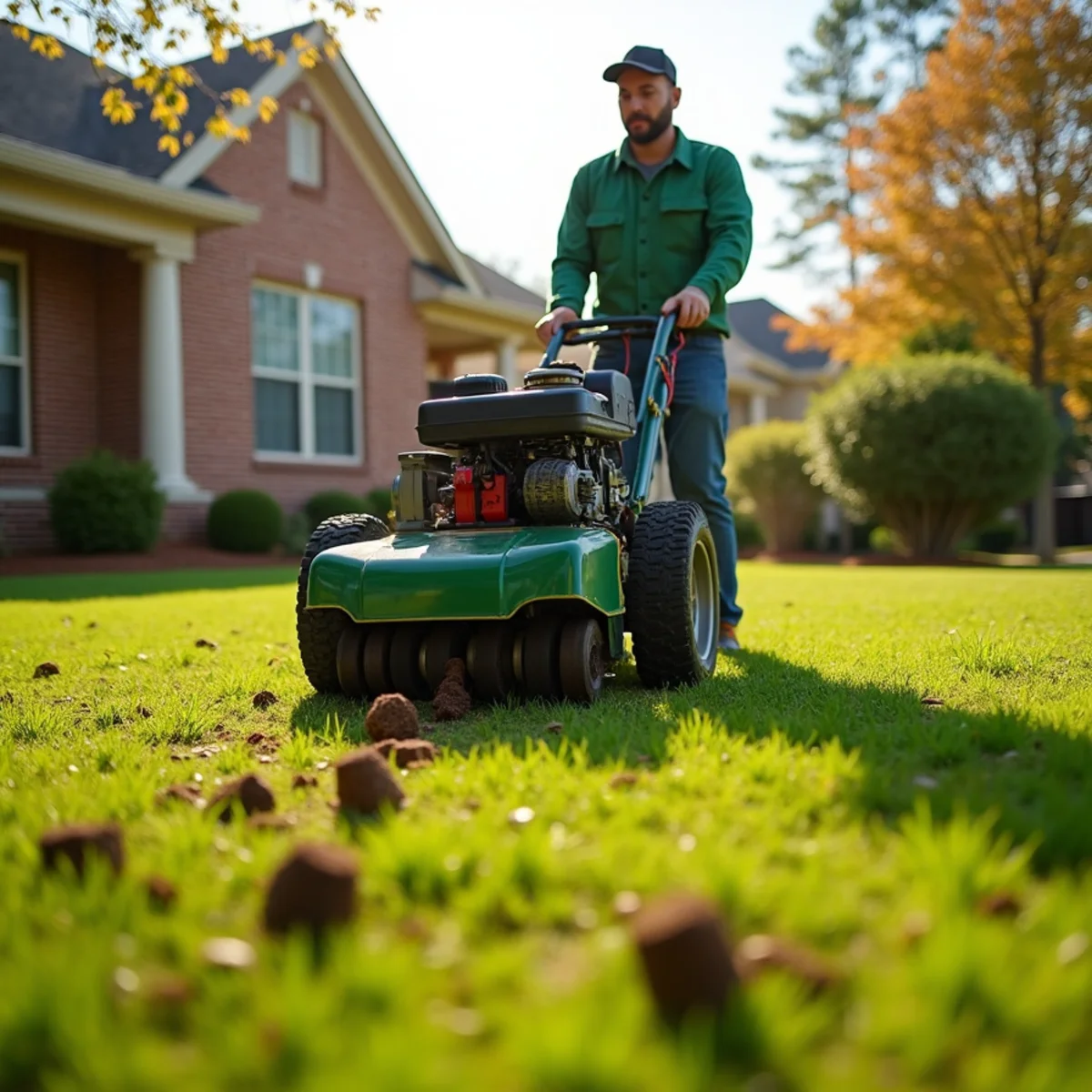
Lawn aeration and overseeding in North Carolina is the one service that does more for a tired fescue lawn than anything else you can buy. Our heavy red clay compacts under foot traffic, mowers, and its own weight, choking roots off from the air, water, and nutrients they need. Core aeration pulls thousands of soil plugs to relieve that compaction, and overseeding into those open holes is how thin, worn-out lawns come back thick. Will Do Lawn Care has aerated and overseeded lawns across Angier and central NC since 2011.
Lawn aeration and overseeding in North Carolina is the one service that does more for a tired fescue lawn than anything else you can buy. Our heavy red clay compacts under foot traffic, mowers, and its own weight, choking roots off from the air, water, and nutrients they need. Core aeration pulls thousands of soil plugs to relieve that compaction, and overseeding into those open holes is how thin, worn-out lawns come back thick. Will Do Lawn Care has aerated and overseeded lawns across Angier and central NC since 2011.
Timing is everything with this service, and getting it wrong wastes the whole investment. In our region, early to mid fall is the window when the soil is still warm enough for fescue seed to germinate quickly but the brutal summer heat has finally broken. That combination gives new grass several weeks to root before winter arrives. Seeding in spring instead fights crabgrass pressure, spring weed competition, and the coming summer stress, and it usually disappoints.
Aeration and overseeding are two jobs that belong together. Aerating without seeding relieves compaction but leaves a thin lawn thin. Seeding without aerating drops expensive seed onto a sealed surface where much of it never makes soil contact and never sprouts. Doing them in one pass, seed dropping straight into fresh open holes, is what turns a bare, hard-packed yard into a lawn you are proud to walk barefoot across.
When your lawn is begging for aeration
These are the signs that compacted, sealed soil is holding your lawn back:
Water runs off instead of soaking in
Puddling or runoff after watering or a normal rain is a classic sign the soil surface is sealed and compacted. The water cannot get down to the roots, so it sheets off and takes your fertilizer with it.
Thin, patchy, or hard-packed turf
If the ground feels like concrete underfoot and the grass keeps thinning no matter what you do, the roots simply cannot breathe or spread in soil that dense.
Heavy thatch layer
A spongy mat of dead material between the green grass and the soil blocks water and nutrients and hides insects and disease. Core aeration helps break that layer down naturally.
Lawn never responds to fertilizer
Feeding compacted clay is like watering a paved driveway. The nutrients sit on top and wash away because they cannot reach roots trapped in sealed soil.
Bare spots and worn traffic paths
Shortcut paths across the yard, dog runs, and play areas pack down hardest and thin out first. These high-traffic zones are exactly where aeration and fresh seed do the most visible good.
Lawn thinned out after a hot summer
Fescue takes a beating in our July and August heat, and a lawn that limped through summer looking sparse needs fall aeration and overseeding to recover density before winter.
How we aerate and overseed
A quality aeration and overseed is about plug density, seed contact, and follow-through:
- 1
Mow low and mark hazards
We cut the lawn slightly shorter than usual and flag sprinkler heads, shallow lines, and invisible-fence wires so the aerator does not catch anything it should not.
- 2
Core aerate the whole lawn
A commercial core aerator pulls plugs across the entire yard, with extra passes on the most compacted, high-traffic zones so those hardest areas actually open up.
- 3
Overseed with the right cultivars
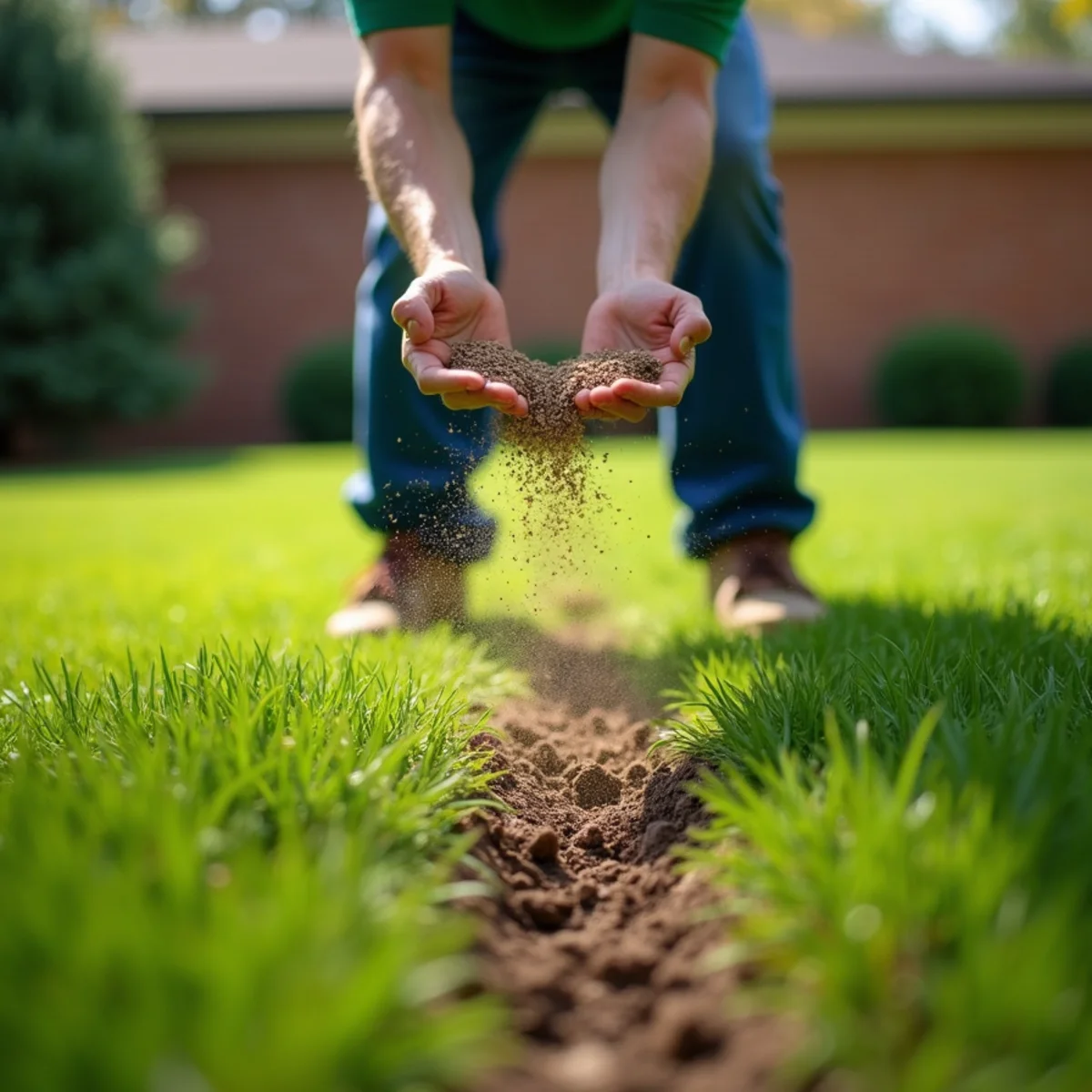
We spread quality turf-type tall fescue, or the correct seed for your lawn, at the proper rate for real coverage rather than a token scatter that leaves gaps.
- 4
Apply a starter feeding
A starter fertilizer goes down with the seed to fuel fast, strong root development in those first critical weeks when the seedlings are most vulnerable.
- 5
Leave the plugs to break down
We leave the soil cores on the surface to melt back into the lawn over the next couple of weeks, returning their nutrients and helping topdress the new seed.
- 6
Hand off a watering plan
You get a simple, specific watering schedule so the seed stays consistently moist through germination, the single step do-it-yourselfers get wrong most often.
Warm-season lawns need aeration too
Aeration is not only a fescue service. Bermuda and zoysia lawns benefit from core aeration in late spring or early summer, when they are actively growing and can heal quickly, though these grasses spread by runners and are usually not overseeded the way fescue is. Relieving compaction still improves rooting, water movement, and overall density, and it pairs well with a warm-season summer feeding to push thicker growth.
Centipede and other low-input warm-season lawns can also be aerated to break up compaction, though they need a gentler hand because they do not want heavy fertilizer afterward. The point is that almost every lawn on our clay soils benefits from having the ground opened up periodically. The right season and the right follow-up simply depend on which grass you are growing.
When aeration alone is not enough
For badly worn lawns or new-construction lots where the builder stripped the topsoil and left compacted subsoil behind, aeration and overseeding may not be enough on their own. When less than half the lawn is decent grass, or the soil is so poor that seed struggles no matter what, we will be straight with you about whether a full renovation or fresh sod is the smarter investment rather than sending you into a second disappointing seeding.
We would rather tell you the honest answer up front than take your money for a service that will not deliver. Sometimes the right recommendation is aeration and overseeding this fall, sometimes it is a soil correction first, and sometimes it is sod. Because we offer all of those in-house, our advice is not steered by only having one tool to sell.
What affects aeration & overseeding cost
A per-lawn quote depends on several things, and we measure before we price:
- Lawn size — Larger areas take more machine time, more seed, and more starter fertilizer, so total square footage is the biggest single driver.
- Seed quality and rate — Premium turf-type tall fescue applied at a proper overseed rate costs more than a bargain contractor mix, and it looks the difference a year later when the cheap seed has thinned out.
- Compaction severity — Very hard, high-traffic lots need double passes to reach real plug density, which adds machine time to the job.
- Access and obstacles — Steep slopes, tight gates the aerator barely fits through, and heavy bed lines all add hand-work around the edges.
- Grass type and goals — A straight compaction-relief aeration on bermuda is a different job than a full fescue renovation overseed, and they price differently.
- Add-on soil work — If a soil test calls for lime or the lawn needs topdressing to really recover, those are quoted alongside the aeration when you want them.
Why Choose Will Do Lawn Care for Aeration & Overseeding
This is a service where local timing and honest advice make all the difference:
Over a decade on NC clay
Since 2011 we have aerated and overseeded lawns on the exact red clay in your yard, so we know the fall window and how our soils respond to it.
We watch the seeding window
Overseed too early into summer heat or too late into the cold and it fails. We book fall work around the real germination window, not just whenever the phone rings.
Quality seed, honest rates
We use good turf-type tall fescue at a proper coverage rate, because cheap seed at a light rate is the number one reason a DIY overseed disappoints.
Licensed, insured, and 5.0-star rated
We are a licensed, insured local company holding a 5.0-star Google rating, and family owned right here in Angier.
Straight talk on what your lawn needs
Because we also offer sod and renovation, we tell you honestly when aeration will fix a lawn and when it is throwing good seed after bad.
Aeration & Overseeding Across Central NC
We provide core aeration & overseeding throughout the Angier area and the wider Triangle. Popular towns we serve:
Aeration & Overseeding — Your Questions Answered
For cool-season fescue lawns, early to mid fall is ideal, because warm soil paired with cooler air gives seed its best chance to root before winter. Warm-season bermuda and zoysia are better aerated in late spring or early summer during active growth. Getting the season right matters more than almost anything else about this job.
Turf-type tall fescue typically germinates in about seven to fourteen days with proper moisture, then fills in over roughly four to six weeks. Consistent watering during those first weeks is by far the biggest factor in success, which is why we hand you a specific schedule instead of leaving it to guesswork.
For lawns on NC clay, yes, annual fall aeration is one of the best investments you can make because our soil re-compacts every year. Sandier soils toward the Sandhills compact less and may only need it every couple of years. We will tell you which category your yard falls into after we see it.
Hold off on mowing until the new seedlings reach mowing height, usually a few weeks, and keep foot traffic light while the seed establishes. We leave the soil plugs on top to break down on their own, so there is no need to rake or clean them up. That first mow should be done with a sharp blade set high.
Yes, and this is the make-or-break step. New seed needs light, frequent watering to stay consistently moist, often a short cycle once or twice a day at first, tapering off as the grass establishes and roots deepen. Let it dry out for even a day during germination and you lose a chunk of the seed you paid for.
Core aeration pulls actual plugs of soil out of the ground, which genuinely relieves compaction and creates open pockets for seed and roots. Spike aeration just pokes holes and can compact the soil around each hole even more. On our dense clay, core aeration is the only version that does real good, and it is the one we use.
You Might Also Need
Ready for Expert Aeration & Overseeding in NC?
Get a free, no-obligation quote today. Same-week response on most estimates — call now or request a quote online.