Standing Water in Your Yard After Heavy Rain? NC Drainage Fixes That Work
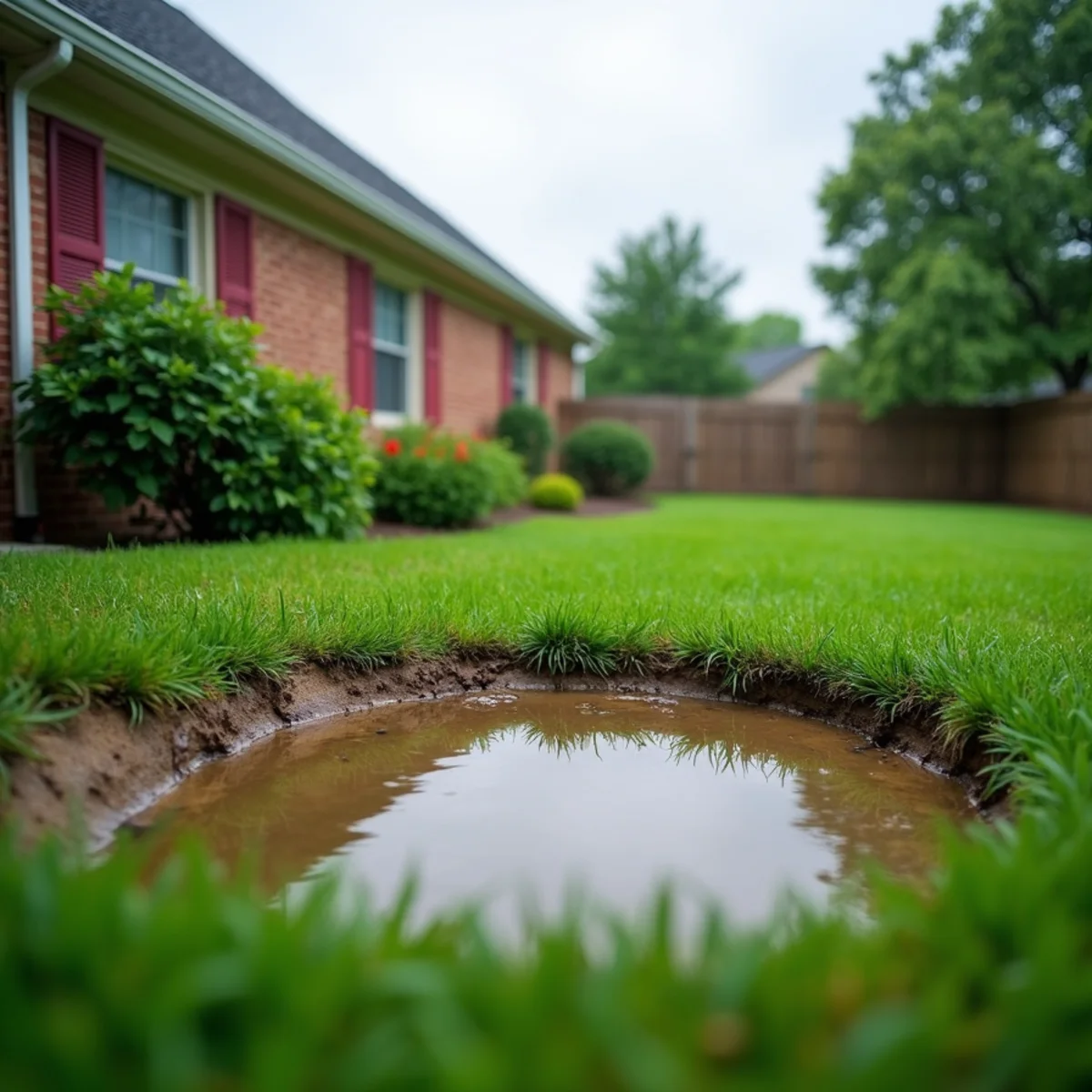
If your yard turns into a shallow pond every time a storm rolls through, and the water is still sitting there two days later, you have a drainage problem, not just bad luck. In the North Carolina Piedmont, the culprit is usually dense red clay that sheds water instead of absorbing it.
The good news: standing water is almost always fixable once you understand where the water is coming from and where it needs to go. Let us walk through it.
Why NC Yards Hold Water
Water pools for a handful of predictable reasons, and most yards have more than one working against them at once.
- Heavy clay soil. Piedmont red clay has tiny pore spaces, so it drains slowly. After it saturates, additional rain has nowhere to go and sits on top.
- Low spots and poor grading. Settling around foundations, old tree removals, or utility trenches creates bowls that collect runoff.
- Compaction. Foot traffic, mowers, and construction squeeze the soil tight so water cannot infiltrate.
- Downspouts dumping at the foundation. A single downspout can pour hundreds of gallons right next to the house during a storm.
- A high water table in low-lying and coastal-plain areas, where the ground stays wet from below.
Why Standing Water Is a Real Problem
Beyond the mosquitoes, sitting water suffocates grass roots within days, invites turf diseases like Pythium, and can push moisture toward your foundation and crawlspace. In a wet Raleigh spring, we have watched homeowners lose whole sections of fescue to standing water they assumed was harmless.
Drainage Fixes That Actually Work
There is no single magic pipe. The right fix depends on where the water sits and why. Here are the solutions we install most across our yard drainage solutions work.
French Drains
A gravel-filled trench with a perforated pipe collects subsurface water and carries it to a safe outlet. This is the workhorse for chronically soggy low areas and clay soils that stay wet under the surface.
Surface and Catch-Basin Drains
Where water pools on top, a graded catch basin tied to solid pipe swallows the puddle and routes it away. These shine at the bottom of driveways and in patio low spots.
Regrading and Swales
Sometimes the fix is dirt, not pipe. Re-establishing gentle slope away from the house, or shaping a shallow swale to guide runoff, solves a surprising number of problems. Our landscaping services crew handles grading, swales, and the planting that stabilizes them.
Downspout Extensions
The cheapest fix on this list. Getting roof water ten or more feet from the foundation, ideally into a buried pipe with a pop-up emitter, relieves a huge share of yard flooding.
What About Just Aerating?
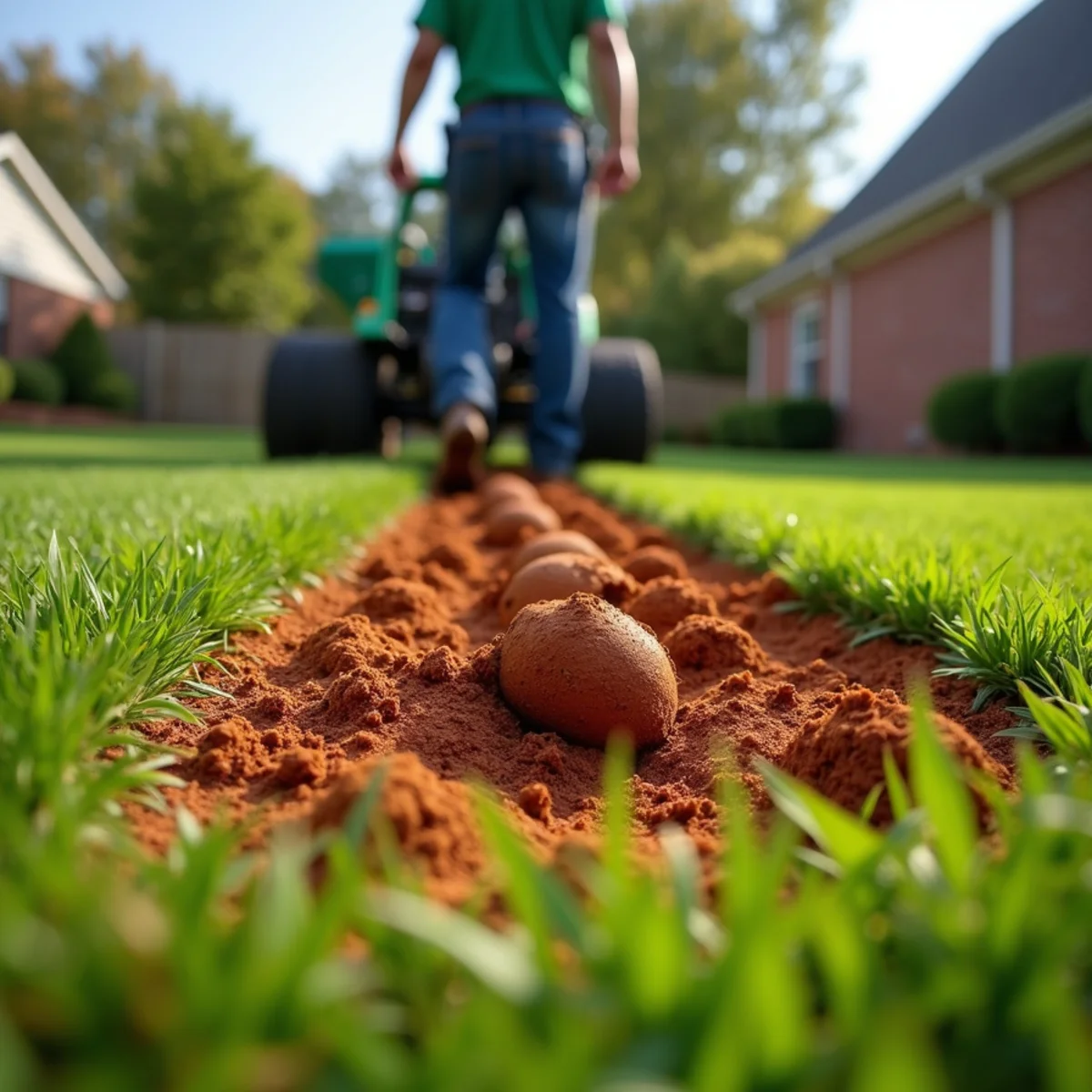
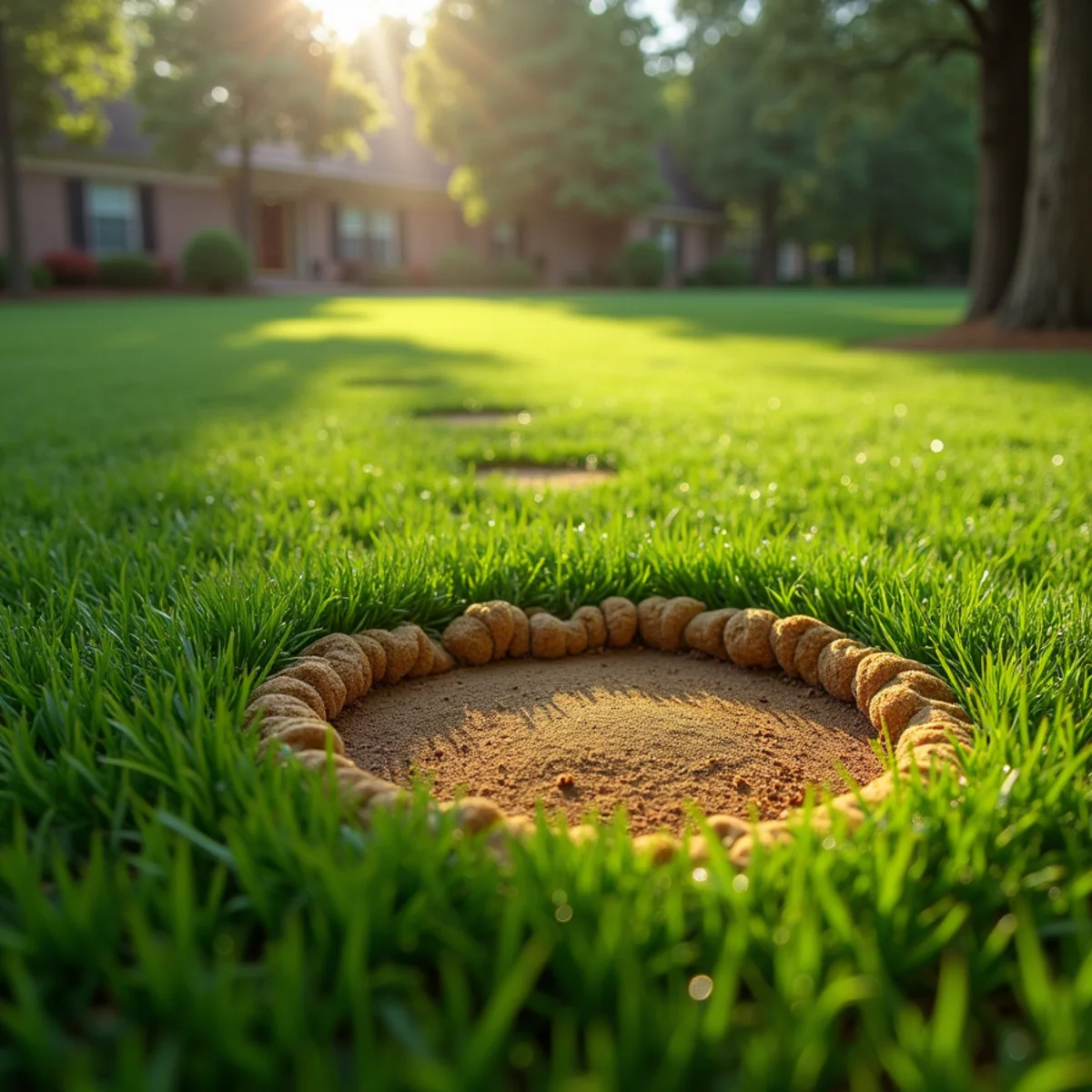
Core aeration genuinely helps mild compaction and lets water infiltrate a little faster, and we recommend it every fall for clay lawns. But aeration alone will not cure a true low spot or a high water table. If water stands for more than 24 hours after rain, you need drainage infrastructure, not just aeration.
Local Conditions Change the Plan
The right solution looks different depending on where you are. In the clay-heavy neighborhoods around Raleigh, we lean on French drains and regrading. In flatter, sandier Hope Mills, where the water table sits high, outlets and grading get more attention so water actually has somewhere to go. We assess each yard on its own before recommending anything.
Where the Water Goes Matters as Much as Collecting It
Homeowners often focus on collecting the water and forget the harder question: where does it go once you pipe it away? A drain with nowhere to daylight simply moves the puddle underground, and in flat, low-lying parts of eastern NC that is a real constraint. The outlet has to be lower than the problem area and sited where the discharge will not flood a neighbor or wash out a bank.
Good outlets include a lower point on your own property, a pop-up emitter in a lawn area with natural fall, a rain garden planted to soak up runoff, or a legal connection to a storm system where permitted. When there is genuinely no gravity outlet, a sump basin with a pump becomes the answer. Getting this part right is the difference between a drainage system that works for a decade and one that clogs and backs up within a season.
Do Not Forget the Neighbor and the Grade
Grading changes send water somewhere, and that somewhere cannot be your neighbor's foundation. We design fixes that keep runoff on a legal, sensible path, which protects you from both a soggy yard and an unhappy conversation over the fence.
How to Trace Where Your Water Comes From
Before any pipe goes in the ground, the water has to be diagnosed. You can gather most of what a good installer needs simply by watching your yard during and right after a hard rain, and the exercise often saves money by pointing to the real culprit.
- Walk the property mid-storm, if it is safe to do so, and note where water sheets across the surface and where it stalls and pools.
- Check every downspout to see whether it is dumping right at the foundation or discharging into a bed that drains back toward the house.
- Find the high and low points, since water always moves downhill and the puddle location tells you where a gravity outlet cannot go.
- Time how long each puddle lasts after the rain stops. A spot that clears within an hour is minor, but one that holds water a full day signals compaction or a true low spot.
- Watch whether water is arriving on your lot from a neighbor's higher ground or from the street, which changes the fix entirely.
This simple survey often reveals that what looks like one big drainage problem is really two or three smaller ones, a misdirected downspout here and a settled low spot there, each with a straightforward fix. It also prevents the classic mistake of installing an expensive French drain in the wrong place while the actual culprit, a downspout pouring hundreds of gallons at the foundation, goes untouched.
Rain Gardens: Working With the Water
On lots where piping water off-site is genuinely difficult, a rain garden turns the problem into a feature. A shallow, planted depression positioned where water naturally collects soaks up runoff and lets it infiltrate slowly, using moisture-loving native plants instead of a pipe. On flat, low-lying eastern NC lots with nowhere to daylight a drain, it is often the most practical option, and it doubles as a habitat and a landscaping feature rather than a bare grate in the lawn.
Stop Fighting the Puddles
You should not have to plan your week around whether your backyard is walkable. Will Do Lawn Care will walk your property, find where the water comes from and where it should go, and design a drainage fix that lasts. Call (323) 606-0255 for a free on-site assessment.
Related services & areas
Ready for a Yard You Can Be Proud Of?
Get a free, no-obligation quote today. Same-week response on most estimates — call now or request a quote online.
Frequently Asked Questions
A healthy yard clears surface water within a few hours, and definitely within 24 hours. Water that lingers a full day or more signals compaction, a low spot, or a drainage failure worth addressing.
Yes, and clay is exactly where they earn their keep. Because clay drains so slowly on its own, a properly graded French drain with a real outlet gives trapped subsurface water a fast path away from the problem area.
Very. Saturated soil suffocates roots within a few days and encourages fungal diseases. Chronic standing water will thin or kill turf and can drive moisture toward your foundation.