Why Your NC Lawn Has Bare Patches (and the 3 Fixes That Actually Work)
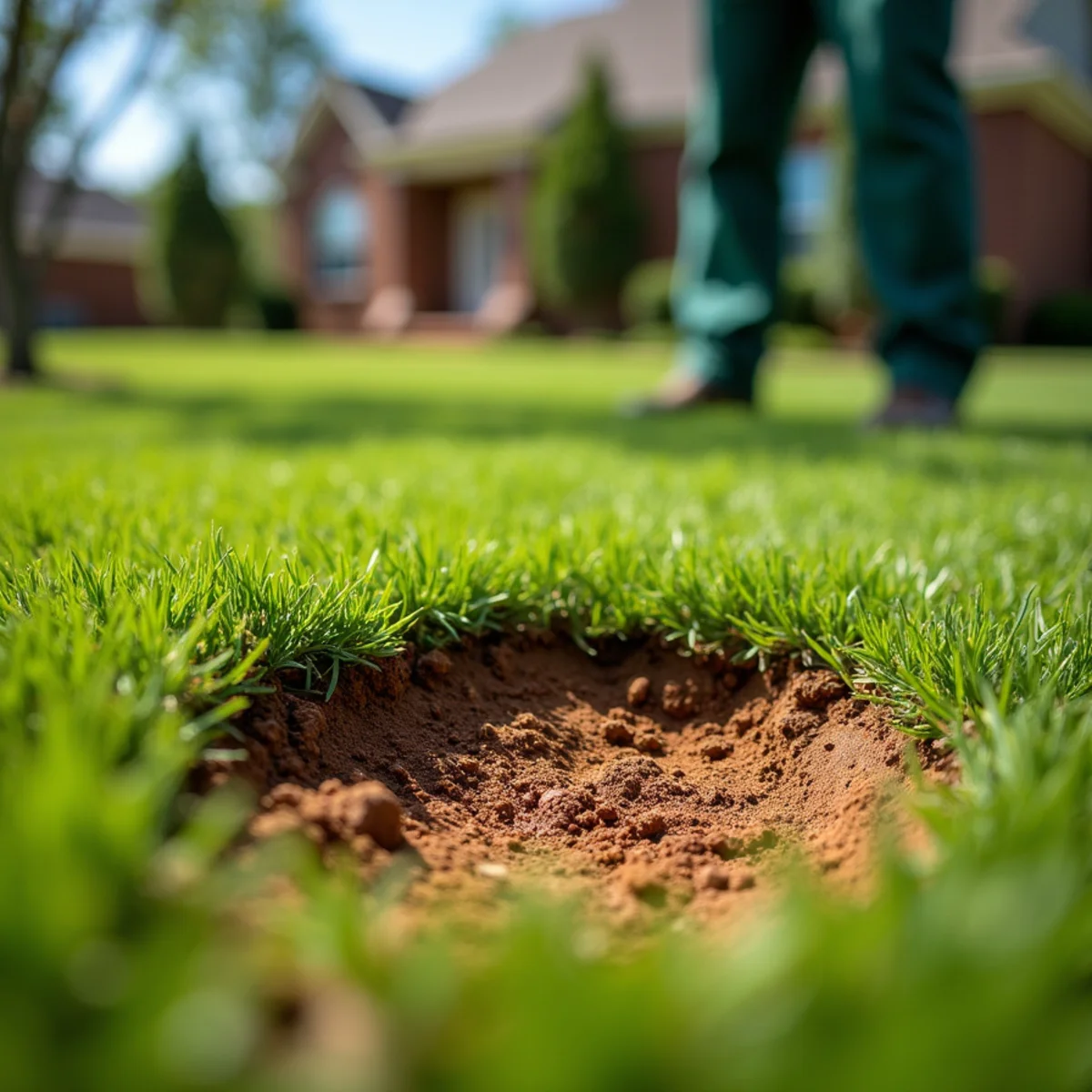
Few things nag at a homeowner like a lawn dotted with bald spots. You water, you mow, and still those thin, dirt-brown patches refuse to fill in. The frustrating part is that bare patches are a symptom, not the disease, and until you find the cause, throwing seed at them will not help.
Let us diagnose why your central NC lawn is thinning, then walk through the three fixes that actually work.
First, Diagnose the Cause
Bare spots trace back to a handful of usual suspects. Match your situation before you fix anything.
- Compacted soil. Central NC red clay packs down hard under traffic, and roots cannot penetrate it. Grass thins out along walkways and play areas first.
- Heavy shade. Grass needs sunlight. Under mature trees or on the north side of the house, turf slowly surrenders.
- Fungal disease. Brown patch and other diseases kill turf in circular dead zones, especially in humid summers.
- Grubs and insects. Larvae eat roots from below, and the grass lifts up like loose carpet.
- Dog spots, spills, or heavy wear. Concentrated damage that simply outpaces recovery.
- Poor drainage. Chronic standing water suffocates roots and leaves mucky, grassless low spots.
You cannot fix a patch caused by shade the same way you fix one caused by compaction. Diagnosis first, always. The single most common mistake we see is a homeowner dumping seed on a bare spot every spring, watching it sprout, then watching it die in the same place by summer, year after year, because the real cause was never touched. Seed is not a diagnosis, and hope is not a plan. Spend the five minutes to figure out what killed the grass before you spend money trying to replace it.
Fix 1: Aeration and Overseeding
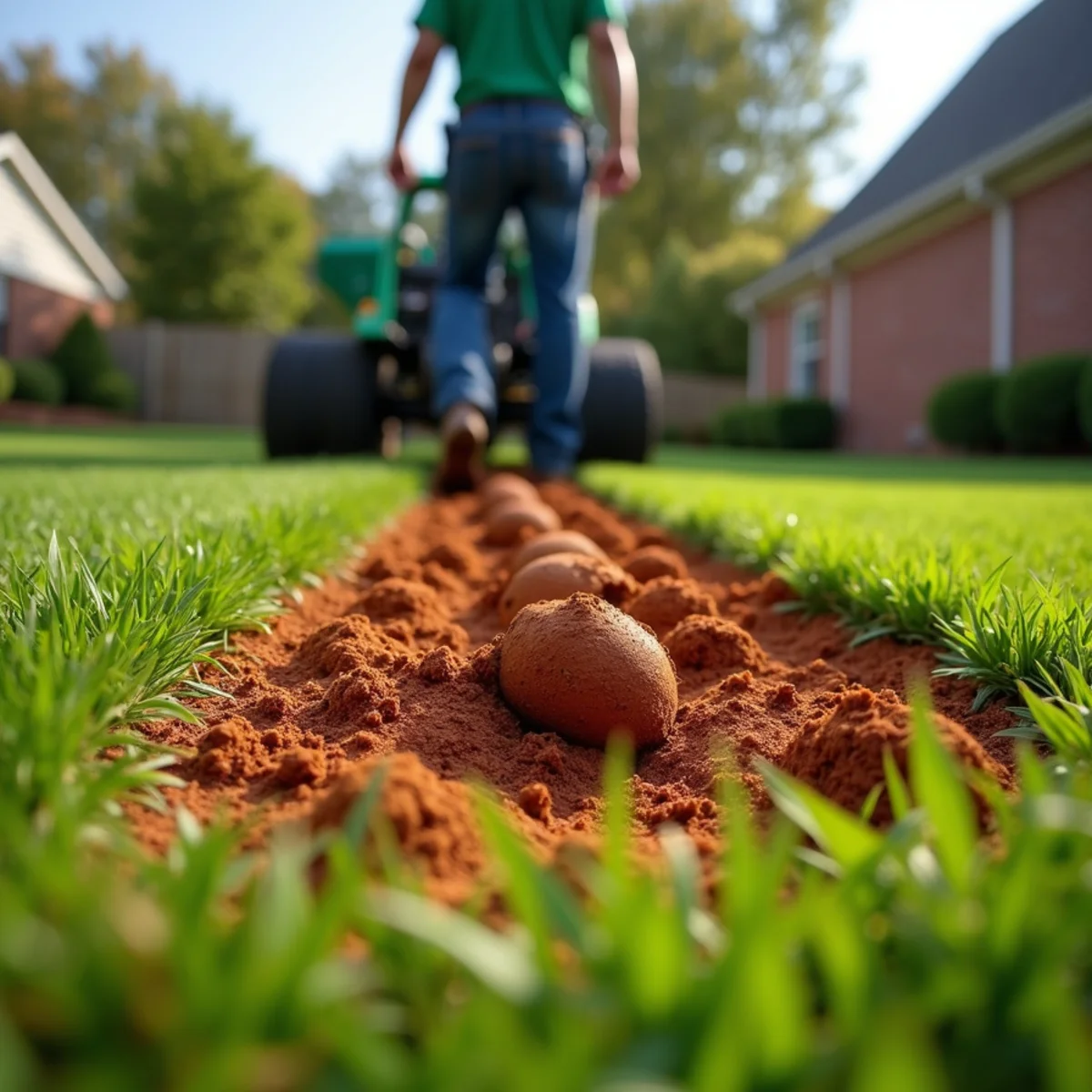
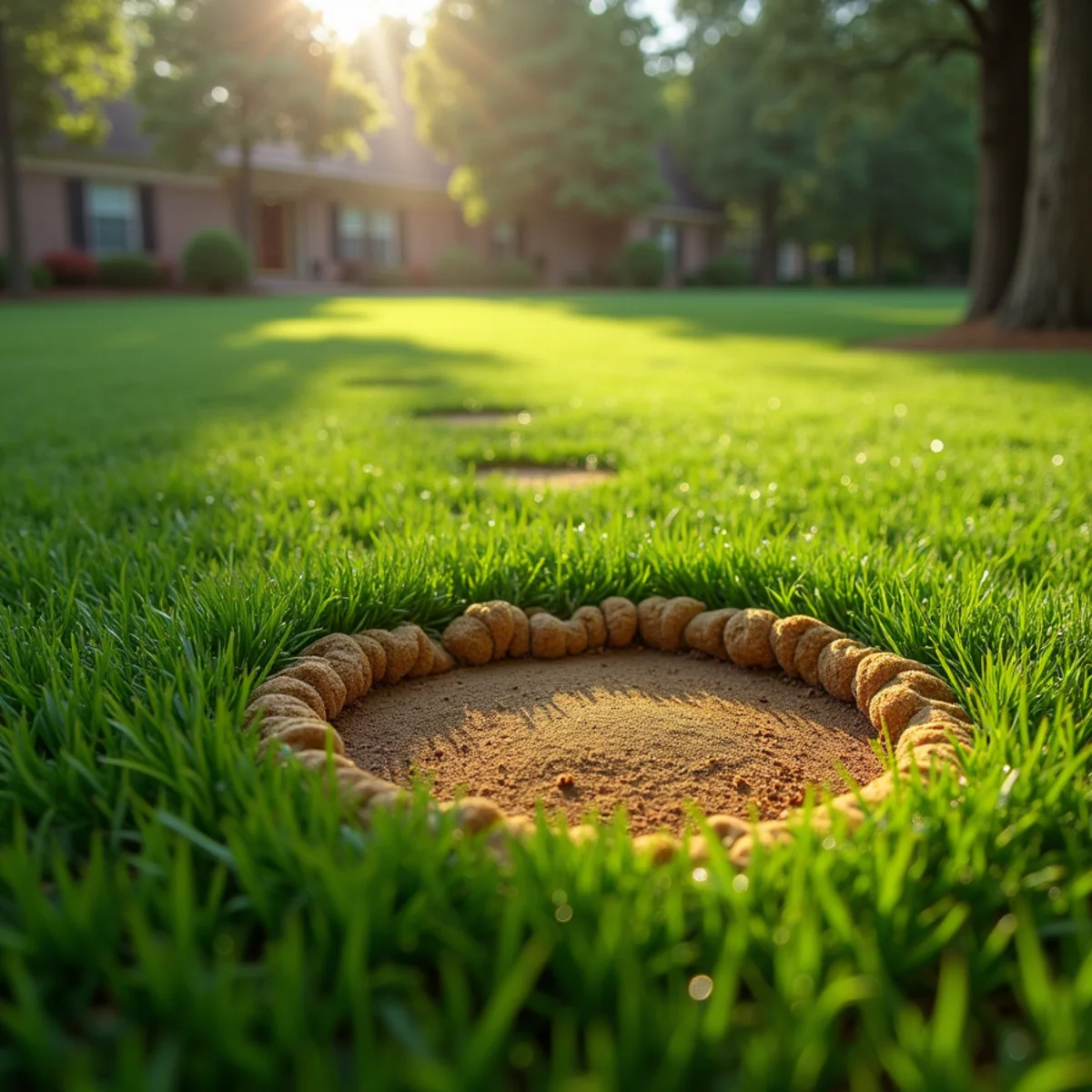
For the most common causes, compaction and general thinning, this is the gold standard. Core aeration pulls plugs of soil to relieve compaction and open channels for air, water, and roots. Follow immediately with overseeding, and the new seed drops into those holes with perfect soil contact.
Timing is everything in our region. For tall fescue, early fall is the ideal window: warm soil, cooling air, and months of good root-building weather before summer stress returns. Our aeration and overseeding service is scheduled around exactly that window.
Fix 2: Address the Underlying Problem
Seed alone is a bandage if the root cause remains. This fix means solving what killed the grass in the first place.
- For fungal disease, correcting mowing and watering habits and applying a fungicide program before reseeding.
- For grubs, treating the insect problem so new grass is not eaten again.
- For drainage, correcting the low spot or standing water before you plant anything.
- For deep shade, thinning tree canopy where possible or shifting to a shade-tolerant approach.
This is where a professional eye saves money. Reseeding into an unsolved problem just buys you the same bare patch next season.
Fix 3: Sod for Instant, Stubborn Spots
Sometimes seed is not the answer. On a high-traffic area, an eroding slope, or a spot you need green now, a piece of fresh sod fills the gap in a day and knits into the surrounding lawn. For larger failed areas, our sod installation gives you a mature-looking lawn immediately instead of babysitting seed for two months.
Serving Garner, Apex, and Nearby
We diagnose and repair thinning lawns across the southern and western Triangle, from established yards in Garner to the shady, tree-lined lots common in Apex, where canopy competition is a frequent culprit.
How to Tell the Causes Apart
Since the fix depends entirely on the cause, spend a few minutes diagnosing before you buy anything. A little detective work in the yard saves you from treating the wrong problem.
- Tug test for grubs. If the grass in a bare spot lifts up like a loose rug with no roots holding it, and you find white C-shaped larvae in the soil, you have grubs.
- Look at the shape. Roughly circular dead zones point to fungal disease, while irregular thinning along paths points to compaction and traffic.
- Check the light. If the bare area sits under a tree canopy or on the north side of the house, shade is the likely culprit.
- Watch after rain. Spots that stay wet and mucky for a day or more are a drainage problem, not a seeding problem.
- Note the timing. Damage that flares in humid summer heat is usually disease, while spots present year-round are usually compaction, shade, or wear.
Once you know which of these you are dealing with, the right fix from the three above becomes obvious, and you stop wasting seed on a problem seed alone cannot solve.
How to Reseed a Bare Spot the Right Way
Once you have solved the underlying cause, the reseeding still has to be done properly, or the new grass fails for a whole new reason. Scattering seed on hard, bare dirt and hoping for rain is the version that almost never works. This sequence gives fescue seed a real chance to take.
- Loosen the top inch or two of soil in the bare spot so the seed can make contact and roots can penetrate the compacted clay.
- Work in a little compost or quality topsoil to give the seedlings something better than bare clay to root into.
- Spread seed at the rate on the bag, then rake it in lightly so it is barely covered rather than sitting exposed on the surface.
- Keep the area consistently moist with light, frequent watering until the seed germinates, which for fescue takes one to two weeks.
- Hold off on mowing the patch until the new grass reaches mowing height, then treat it gently for the first few cuts.
Timing still rules everything. In central NC, early fall is the window where this works reliably, giving fescue seedlings cool air, warm soil, and months to establish before summer stress returns. The same effort in late spring fights a losing battle against the coming heat, which is why so much spring-seeded grass sprouts and then dies by July.
Keep the Spot From Coming Back Bare
A repaired patch stays repaired only if the condition that caused it is managed going forward. If foot traffic thinned it, consider a stepping-stone path or a tougher grass in that lane; if shade did, accept thinner turf or shift to a shade strategy; if compaction did, keep up with annual fall aeration. Otherwise the same spot reopens next year, and you are back to reseeding the exact dirt you reseeded last season.
Let Us Find the Real Cause
Stop reseeding the same spots year after year. Will Do Lawn Care will diagnose exactly why your lawn is thinning and apply the fix that lasts. Call (323) 606-0255 for a free lawn assessment.
Related services & areas
Ready for a Yard You Can Be Proud Of?
Get a free, no-obligation quote today. Same-week response on most estimates — call now or request a quote online.
Frequently Asked Questions
Almost always because the underlying cause is still there. Compaction, disease, grubs, poor drainage, or deep shade will kill new seedlings just like they killed the last grass. Fix the cause first, then reseed.
For tall fescue, early fall is ideal. Warm soil and cooling air give seedlings months to build roots before summer heat. Spring seeding is possible but leaves young grass facing summer stress much sooner.
Seed is economical for general thinning during the fall window. Sod is better for high-traffic areas, erosion-prone slopes, or when you need an instant, mature-looking fix without waiting for seed to establish.