Brown Patch Fungus in Tall Fescue: A Central NC Summer Survival Guide
If you grow tall fescue in central North Carolina, you have probably met brown patch, whether you knew its name or not. It is the disease that turns a lush June lawn into a mess of tan, circular dead zones almost overnight when the humid heat sets in.
Brown patch is the number one summer enemy of fescue in our region. The good news is that with the right habits and a smart treatment plan, you can keep it in check. Here is your survival guide.
What Brown Patch Looks Like
The disease is caused by the fungus Rhizoctonia, and it thrives in exactly the conditions our summers deliver: high humidity, warm nights above 68 degrees, and extended leaf wetness.
- Roughly circular patches of tan or brown grass, from a few inches to several feet across.
- A darker, smoke-gray ring at the edge in the early morning when dew is heavy, the classic tell.
- Individual blades with irregular tan lesions bordered by a thin brown margin.
- Damage that appears fast, often after a warm, muggy night following irrigation or rain.
Why Fescue Is So Vulnerable Here
Central NC sits in the transition zone, too hot for fescue to be fully comfortable in summer and too cold for warm-season grasses to dominate. Tall fescue is our best cool-season option for shade and year-round green, but July and August genuinely stress it, and stressed grass is what brown patch attacks.
Prevention Comes First
You cannot spray your way out of bad habits. Cultural practices matter more than any fungicide, because they deny the fungus the moisture and lushness it needs.
Water Early, Deep, and Infrequently
Water in the early morning, never in the evening. Overnight leaf wetness is what feeds the disease. Water deeply a couple of times a week rather than a little every day, so the surface dries out between soakings.
Ease Off the Nitrogen in Summer
Heavy nitrogen in late spring pushes soft, lush growth that is candy for brown patch. Save the bulk of your feeding for fall. A balanced, properly timed program is central to our lawn fertilization and weed control plans, which are built to keep fescue tough through summer rather than forcing tender growth at the worst time.
Mow High and Keep Blades Sharp
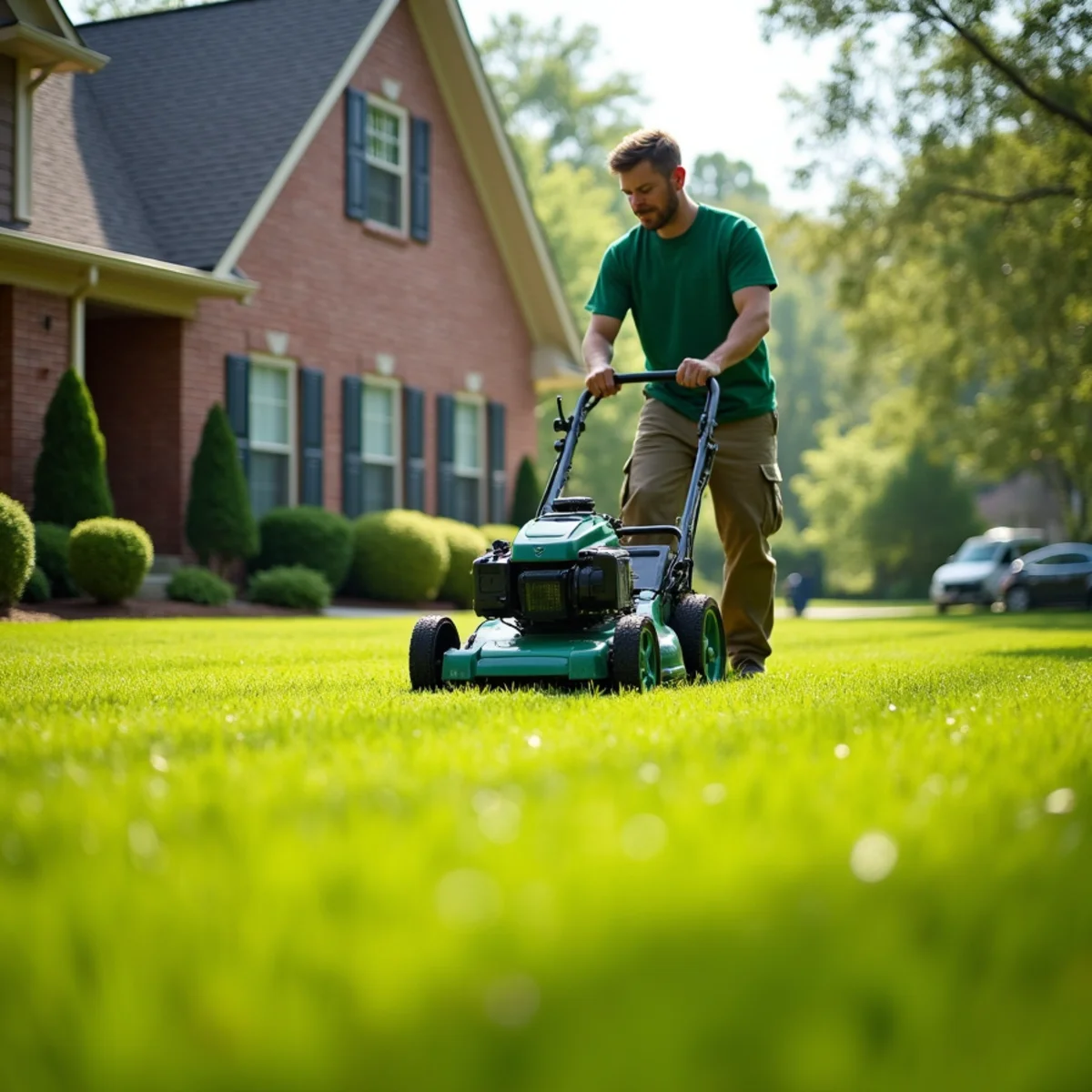
Mow fescue tall in summer, around 3.5 to 4 inches, to shade the soil and reduce stress. A sharp blade makes a clean cut, while a dull one shreds the tips and opens wounds the fungus exploits.
Improve Airflow and Reduce Thatch
Good airflow dries the canopy faster. Aeration reduces thatch and compaction, both of which trap the moisture brown patch loves.
When to Treat with Fungicide
In a lawn with a history of severe brown patch, preventive fungicide applications through the high-risk summer window can be worth it. Timing and product rotation matter, and a curative spray after damage appears only stops further spread, it will not resurrect dead grass. This is where a professional program pays off.
Repairing the Damage
Brown patch usually kills the leaf, not always the crown, so lawns often recover as temperatures ease. Thin spots that do not bounce back should be overseeded in fall. Consistent, expert maintenance through our lawn care services keeps the whole system, mowing, watering, feeding, and disease watch, working together.
Serving Holly Springs, Lillington, and Beyond
We help fescue lawns survive the summer across the region, from the manicured neighborhoods of Holly Springs to yards in Lillington, where hot, humid Harnett County summers make brown patch a yearly battle.
Do Not Confuse Brown Patch With Other Problems
Not every brown area in a summer lawn is brown patch, and treating the wrong problem wastes time and money. A few look-alikes trip up homeowners every year.
- Drought stress shows up on the high, sunny, sandy spots first and greens back up after a good watering, while brown patch appears as distinct circles regardless of moisture.
- Dollar spot makes much smaller, silver-dollar-sized bleached spots rather than large patches, and is favored by low nitrogen.
- Grub damage peels up with no roots, which disease never does.
- Dog urine and fertilizer spills leave small, sharply defined dead spots, often with a greener ring around them.
The tell for true brown patch is that smoke-gray leading edge visible in early-morning dew and the fast appearance after a warm, muggy night. When in doubt, a professional can confirm the diagnosis before you spend on a fungicide you may not need. Guessing wrong is how a simple watering-habit fix turns into a summer of frustration.
Why Brown Patch Returns Every Summer
Homeowners who beat back brown patch one year are often frustrated to see it again the next, and it is not because they did anything wrong. The fungus that causes it, Rhizoctonia, lives in the soil and thatch year-round. It does not blow in from somewhere else, it is already present, waiting for the conditions that let it flare.
Those conditions are exactly what a central NC summer delivers on repeat: warm nights above about 68 degrees, high humidity, and long stretches of leaf wetness. When all three line up, usually after a warm, muggy night following rain or evening watering, the fungus goes to work on grass already stressed by the heat. Because the pathogen never leaves and the weather comes back every July and August, brown patch is best understood as something you manage each year, not something you cure once and forget.
Setting the Lawn Up to Resist It
The most brown-patch-resistant fescue lawn is a properly built one. Improved turf-type tall fescue blends, established thick through fall overseeding, hold up better than thin, aging stands. Good airflow, controlled thatch, morning-only watering, and restrained spring nitrogen deny the fungus the lush, wet, tender growth it favors. None of this makes fescue immune, but it drops the severity from lawn-wrecking to a few spots that recover as the humidity eases. In a yard with a history of heavy damage, adding a preventive fungicide program through the high-risk window turns a yearly disaster into a manageable routine.
Protect Your Fescue This Summer
Brown patch is manageable with the right plan, but it moves fast once conditions turn. Will Do Lawn Care builds a prevention and treatment program tuned to your lawn. Call (323) 606-0255 for a free assessment before the next humid spell.
Related services & areas
Ready for a Yard You Can Be Proud Of?
Get a free, no-obligation quote today. Same-week response on most estimates — call now or request a quote online.
Frequently Asked Questions
Often yes. Brown patch usually kills the leaf blades rather than the crown, so fescue frequently recovers as summer humidity eases. Thin spots that do not rebound should be overseeded in the fall.
Water in the early morning only, never in the evening. Overnight leaf wetness is the biggest driver of the disease. Pair that with mowing high, sharp blades, and easing off summer nitrogen.
Not every lawn does. In yards with a history of severe brown patch, preventive fungicide during the summer risk window helps, but cultural practices come first. A curative spray stops spread but will not revive already-dead grass.