Does Homeowners Insurance Cover Fallen Tree Removal in North Carolina?
A tree comes down and, after the shock, the practical question hits: is any of this covered? For North Carolina homeowners the answer is often yes, but with conditions that surprise people. The details decide whether your insurer pays for removal or you do.
We are lawn and tree professionals, not insurance agents, so always confirm with your carrier. But here is the framework that governs most standard NC homeowners policies, and understanding it before you call your adjuster helps you ask the right questions and set realistic expectations. Every policy has its own wording, but the principles below hold true across the great majority of the coverage sold in North Carolina.
The Golden Rule: Did It Hit a Structure?
This is the hinge everything turns on. Most standard homeowners policies cover fallen tree removal when the tree damages a covered structure, and generally not when it simply falls in the open yard.
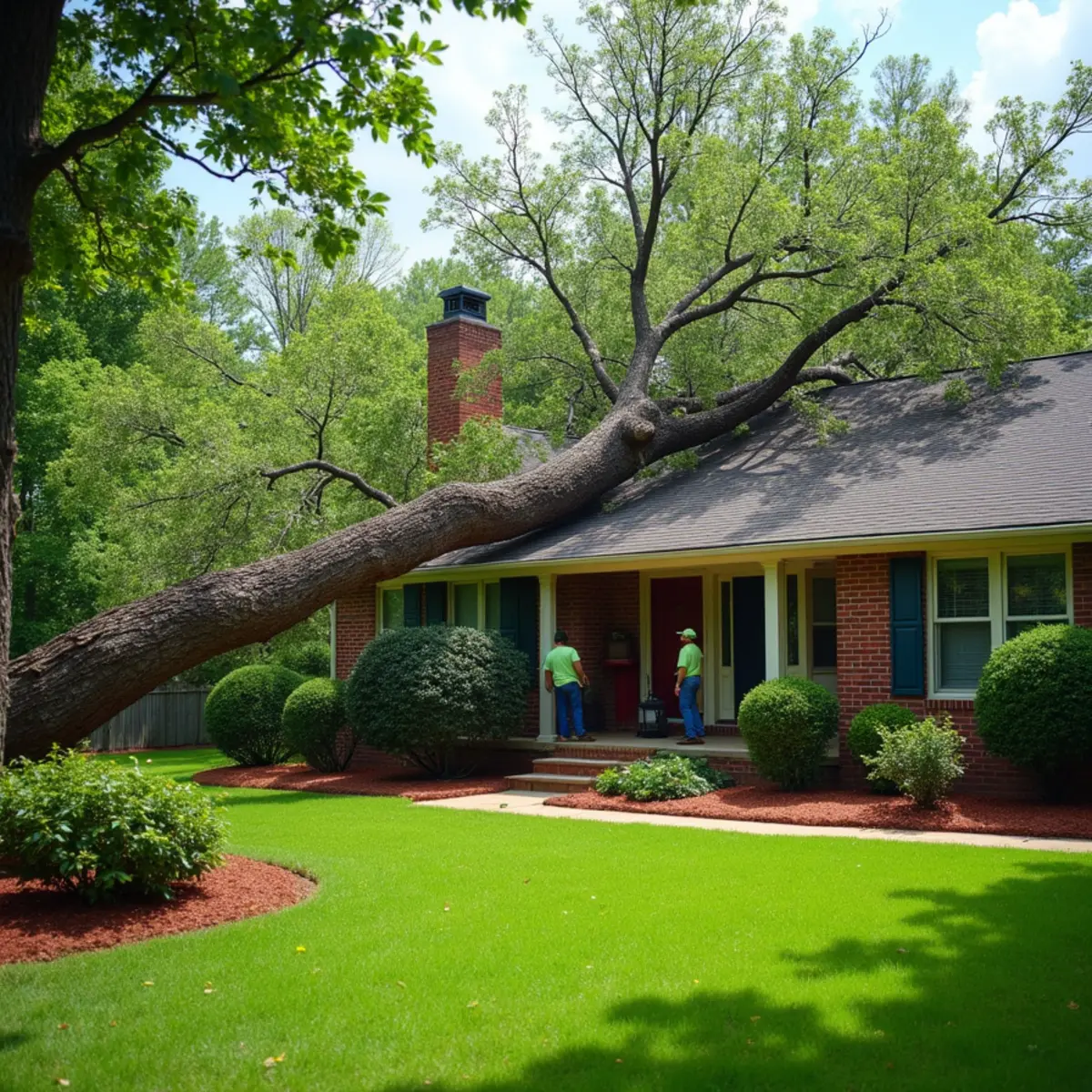
- Tree hits your house, garage, shed, or fence: removal is usually covered, along with repairs to the structure, subject to your deductible.
- Tree falls harmlessly in the yard: typically not covered, because there is no damage to insured property. Removal comes out of pocket.
- Tree blocks your driveway or a ramp for a disabled resident: many policies include a limited removal allowance even without structural damage.
The Cause Matters Too
Coverage generally applies when the tree fell from a covered peril: wind, storms, hail, or the weight of ice. That fits North Carolina's hurricane and ice-storm reality well.
But if the tree fell because it was clearly dead, diseased, or neglected, the insurer may deny the claim, arguing it was a maintenance issue you should have addressed. This is a strong reason to remove obviously dying trees before a storm does it for you.
Watch the Removal Sub-Limit
Even a covered claim often caps debris removal at a set dollar amount per fallen tree or per event, commonly around $500 to $1,000, regardless of the actual cost. Large hardwoods can cost more than that to remove, so you may cover part of the difference.
Read your declarations page for the tree-removal sub-limit before you assume the whole job is paid.
Whose Tree, Whose Claim?
If your neighbor's tree falls on your property, it is generally your insurance that responds, not theirs, unless you can show the neighbor was negligent about a tree they knew was hazardous. It feels unfair, but that is how most claims play out. The logic insurers use is that the tree landing on your property makes it your damage to address, and chasing the neighbor's policy only becomes realistic when there is documented proof they ignored a clearly dangerous tree.
How to Handle the Claim Right
- Photograph and video everything before cleanup, including the damage and the root ball.
- Prevent further damage, for example tarping a hole, and keep those receipts, since most policies require you to mitigate.
- Call your insurer promptly and get a claim number.
- Keep an itemized invoice from your removal contractor.
- Do not sign over your claim to anyone pressuring you at the door after a storm.
When Should You File a Claim at All?
Not every fallen tree is worth a claim, and filing has consequences beyond the immediate payout. Weigh the numbers before you call your adjuster.
- Compare the likely removal and repair cost against your deductible. If the job costs only a little more than your deductible, filing may not be worth it.
- Remember that removal sub-limits cap what the policy pays even on a covered claim, so a large hardwood may leave you covering the balance regardless.
- Understand that claims can affect your future premiums, so a small out-of-pocket job sometimes costs less over time than a claim.
- For clearly major damage to the home or a total-loss scenario, filing is almost always the right move.
Document Preventive Removals Too
If you have a large, obviously declining tree leaning toward the house, removing it proactively is cheaper than the emergency plus repairs after it falls, and it removes the neglect argument an insurer might use to deny a future claim. Keep records showing you maintained your trees responsibly.
We Work With Your Claim
Our crews provide the clear, itemized documentation adjusters want. Whether the tree is on the roof or across the yard, our fallen-tree and limb removal service gets it down safely, and our storm debris cleanup hauls off the wood and brush so the property is fully restored.
Serving Cary, Durham, and the Triangle
After every major storm we help homeowners across the Triangle document and clear tree damage, from the tree-lined neighborhoods of Cary to the mature canopy around Durham, where big old hardwoods make for beautiful streets and heavy cleanups.
What Good Documentation Looks Like
Whether a claim is approved, and for how much, often comes down to the quality of the paperwork. Adjusters work from evidence, so the more organized your record, the smoother the process and the less likely a payout gets trimmed on a technicality.
- Wide shots showing the whole scene plus close-ups of every point of damage, all taken before any cleanup begins.
- Photos of the root ball and the failure point, which help establish that a covered peril rather than neglect brought the tree down.
- An itemized invoice from your removal contractor that separates tree removal, debris haul-off, and any structural work, rather than one lump sum.
- Receipts for any emergency mitigation, like a tarp over a roof hole, since policies require you to prevent further damage.
- The claim number and a simple log of who you spoke with and when.
We provide the itemized, clearly worded documentation adjusters look for, which is one of the most common friction points when homeowners try to self-document a chaotic post-storm scene. A vague, handwritten total is far easier for a carrier to question than a clean breakdown of exactly what was done and why it was necessary.
Do Not Let a Contractor Take Over Your Claim
After every major storm, operators go door to door pressing homeowners to sign over their insurance claim or commit on the spot. Never assign your claim to someone you just met, and never let urgency push you into a contract without a written scope and proof of insurance. Your carrier works with you, the policyholder, not with a stranger who happened to show up in your driveway with a chainsaw and a clipboard.
Get It Cleared and Documented
Whether or not insurance covers your situation, the tree still has to come down safely. Will Do Lawn Care removes fallen trees and provides the paperwork your claim needs. Call (323) 606-0255 for a free assessment and honest guidance.
Related services & areas
Ready for a Yard You Can Be Proud Of?
Get a free, no-obligation quote today. Same-week response on most estimates — call now or request a quote online.
Frequently Asked Questions
Usually not. Standard NC homeowners policies cover fallen tree removal when the tree damages a covered structure like your house, garage, or fence. A tree that falls harmlessly in the open yard is typically your own expense.
Generally your own policy responds, then may pursue the neighbor only if you can show they were negligent about a tree they knew was dangerous. Document everything and file with your carrier first.
Often yes. Many policies cap debris removal at roughly $500 to $1,000 per tree or event, even on a covered claim. Check the tree-removal sub-limit on your declarations page.