How Often Should You Mow Your Lawn in North Carolina's Growing Season?
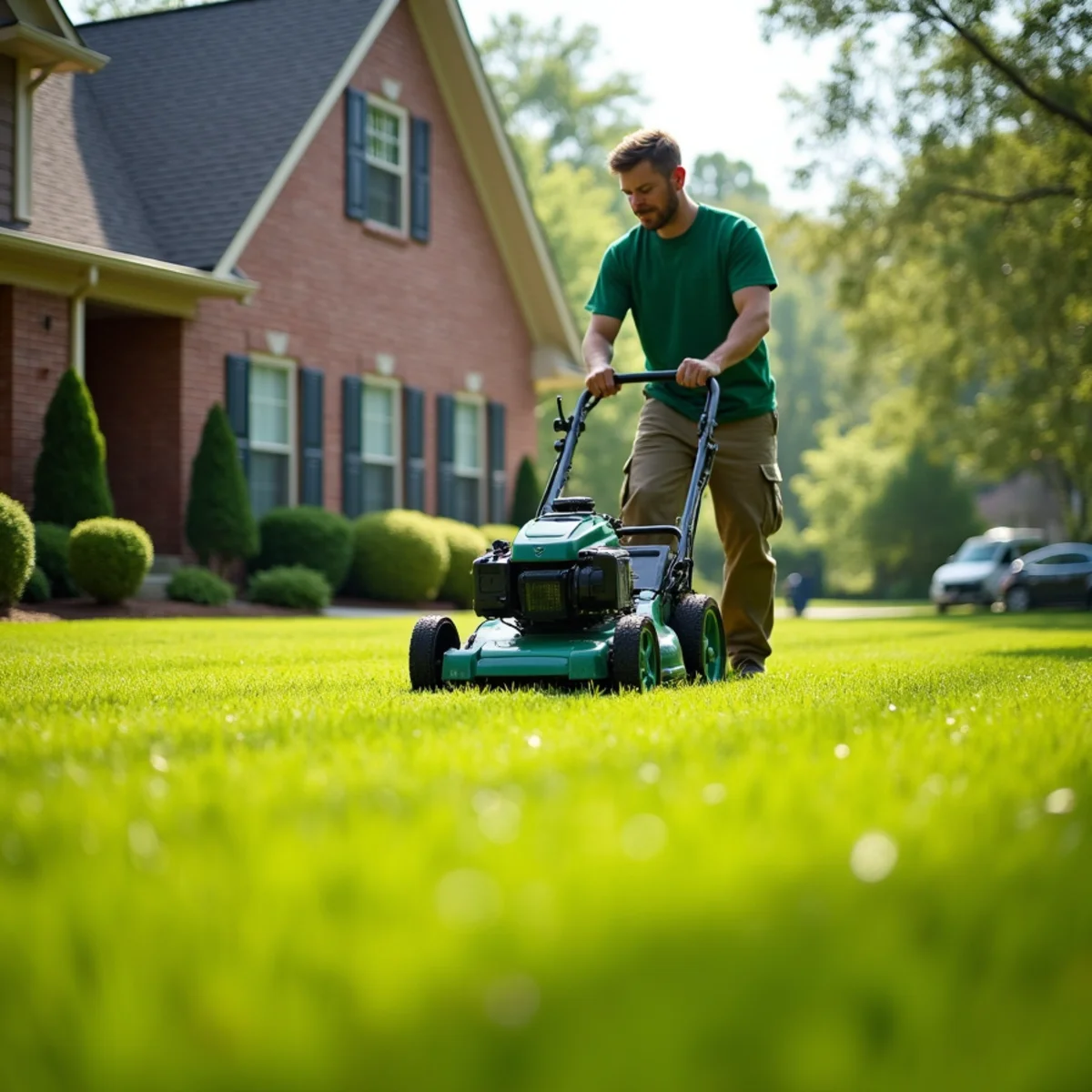
How often should you mow? It sounds simple, but the honest answer is that it depends on the grass, the season, and how fast your lawn is growing right now. Mow on a rigid calendar and you will sometimes scalp the grass and sometimes let it get away from you.
The better approach is to mow by how the grass grows, not by a fixed date. A calendar cannot know whether it rained all week or the lawn baked in a dry spell, but your grass shows you plainly. Here is how to think about it through a North Carolina growing season.
The One-Third Rule Governs Everything
This is the single most important mowing principle: never remove more than one-third of the grass blade in a single cut. Cutting more than that shocks the plant, weakens the roots, and invites weeds and disease.
So your mowing frequency is really set by how fast the grass grows past that one-third threshold. In the flush of spring, that can be every five to seven days. In the heat or dormancy, it stretches out.
A Season-by-Season Guide
Spring (March to May)
Growth explodes as soil warms and rain falls. This is peak mowing season, often weekly and sometimes more for fast-growing lawns. Cool-season fescue is thriving, and warm-season grasses are greening up. Staying on top of it now sets the tone for the whole year.
Summer (June to August)
Here the two grass families diverge sharply.
- Tall fescue slows in the heat and should be mowed high, around 3.5 to 4 inches, to protect it from summer stress and brown patch. Frequency often eases to every 7 to 10 days.
- Bermuda and zoysia love the heat and grow fast, often needing weekly or even more frequent mowing to stay tidy at their lower cut height.
Fall (September to November)
Fescue surges again in the cool weather and needs regular mowing, while warm-season grasses slow down and eventually go dormant. Keep mowing fescue until growth truly stops, and keep leaves cleared so they do not smother the turf.
Winter (December to February)
Warm-season lawns are brown and dormant, needing little to no mowing. Fescue grows slowly and may need an occasional cut in mild spells but mostly rests.
Height Matters as Much as Frequency
The right mowing height changes by grass type: fescue tall, bermuda and centipede low, zoysia in between. Taller grass grows deeper roots, shades out weeds, and holds up to drought far better. Scalping a lawn short to mow less often is a false economy that stresses the turf and opens the door to weeds.
A Few Habits That Protect Your Lawn
- Keep the blade sharp. A dull blade tears the grass, leaving a ragged, disease-prone tip.
- Mow when the grass is dry to avoid clumping and spreading disease.
- Vary your mowing pattern so you do not create ruts and grain.
- Leave the clippings when you can. They break down and feed the soil, a practice called grasscycling.
Let Someone Else Watch the Calendar
Consistent, correct mowing is the backbone of a healthy lawn, and it is also the chore most people struggle to keep up with all season. Our lawn care services keep your lawn on the right schedule and height for its grass type, and our residential lawn care plans adjust frequency as growth speeds up and slows down through the year.
Serving Clayton, Knightdale, and Nearby
We keep lawns sharp on the right rhythm across the eastern Triangle, from growing neighborhoods in Clayton to family yards in Knightdale.
What Happens When You Skip Mows
Life gets busy, it rains for a week, and suddenly the lawn is tall enough that you cannot cut it properly without breaking the one-third rule. This is one of the most common ways homeowners accidentally hurt their turf.
When grass gets away from you, resist the urge to scalp it back to normal in a single pass. Removing that much leaf at once starves the roots and can leave the lawn yellow and stressed for weeks. Instead, cut it in stages: take off the top third now, let it recover for a few days, then lower the height again until you are back to the target. It takes patience, but it protects the lawn far better than one drastic cut.
This is also where recurring service quietly pays off. A lawn kept on a steady schedule never reaches the overgrown, cut-it-in-stages situation in the first place, which means less stress on the grass and a consistently sharp look with no scrambling on your part.
Reading the Lawn Instead of the Calendar
The healthiest lawns are cut on the grass's schedule, not a rigid weekly date, and learning to read a few simple signs tells you when it is genuinely time. Since growth speed swings with rain and temperature, the same lawn might need cutting every five days in a wet May and every ten in a dry August.
- Measure against your target height. If the grass has grown roughly a third above where you cut it, it is time, whatever the calendar says.
- Watch the color and texture. A lawn taking on a slightly shaggy, uneven, or darker look has usually crossed the one-third line.
- Factor in recent weather. A soaking week plus warm temperatures means faster growth and a shorter interval, while a dry, hot spell slows fescue down and stretches it out.
- Do not mow drought-stressed grass short. When the lawn is heat-stressed and barely growing, cutting only adds insult, so raise the height and wait.
Grasscycling: Let the Clippings Feed the Lawn
When you mow on the right schedule, the clippings are short enough to leave on the lawn, a practice called grasscycling. Contrary to the old myth, clippings do not cause thatch; they break down quickly and return nitrogen and organic matter to the soil, trimming your fertilizer needs over a season. The key is mowing often enough that you are never removing long clumps that smother the grass beneath them, which is one more reason a steady schedule beats letting the lawn get away from you and then hacking it back.
Get on a Schedule That Works
The right mowing frequency changes with the season, and staying on top of it is half the battle. Will Do Lawn Care handles the timing, the height, and the sharp blades so your lawn thrives. Call (323) 606-0255 for weekly or biweekly service.
Related services & areas
Ready for a Yard You Can Be Proud Of?
Get a free, no-obligation quote today. Same-week response on most estimates — call now or request a quote online.
Frequently Asked Questions
Spring is peak growth, so most NC lawns need mowing weekly, and fast-growing lawns sometimes more. The guide is the one-third rule: mow whenever the grass has grown enough that you would remove no more than a third of the blade.
No. Scalping stresses the grass, weakens roots, and lets weeds in. Taller grass grows deeper roots and resists drought and weeds better. Mow at the right height for your grass type and adjust frequency instead.
Around 3.5 to 4 inches. Taller fescue shades the soil, keeps roots cooler, and better resists summer heat stress and brown patch disease, which is the biggest threat to fescue in central NC summers.