Weeds Taking Over Your Lawn? When to DIY vs. Call a Pro in NC
Every NC homeowner fights weeds. The question is not whether you will see them but how to win without wasting money on products that do not work or, worse, damaging your lawn. Sometimes a bag from the hardware store is plenty. Sometimes it is throwing good money after bad.
Here is an honest look at when do-it-yourself weed control makes sense and when it is time to call in a professional program. Knowing the difference saves you from both extremes: overpaying for help with a few dandelions you could pull yourself, and wasting a whole summer on store products that were never going to solve a lawn that is more weeds than grass.
Know Your Enemy First
You cannot treat what you cannot identify. Weeds fall into a few families, and each is beaten differently.
- Broadleaf weeds like dandelion, clover, henbit, and wild violet. Most respond to broadleaf herbicides, though violet is famously stubborn.
- Grassy weeds like crabgrass and goosegrass. These are best stopped before they sprout, with a pre-emergent, because once they are up they are hard to kill without hurting your good grass.
- Sedges like nutsedge, which look grassy but are neither grass nor broadleaf and shrug off ordinary weed killers, needing a specific product.
- Winter annuals vs. summer annuals, which sprout in different seasons and demand different timing.
When DIY Makes Sense
You can reasonably handle it yourself when the situation is simple and small.
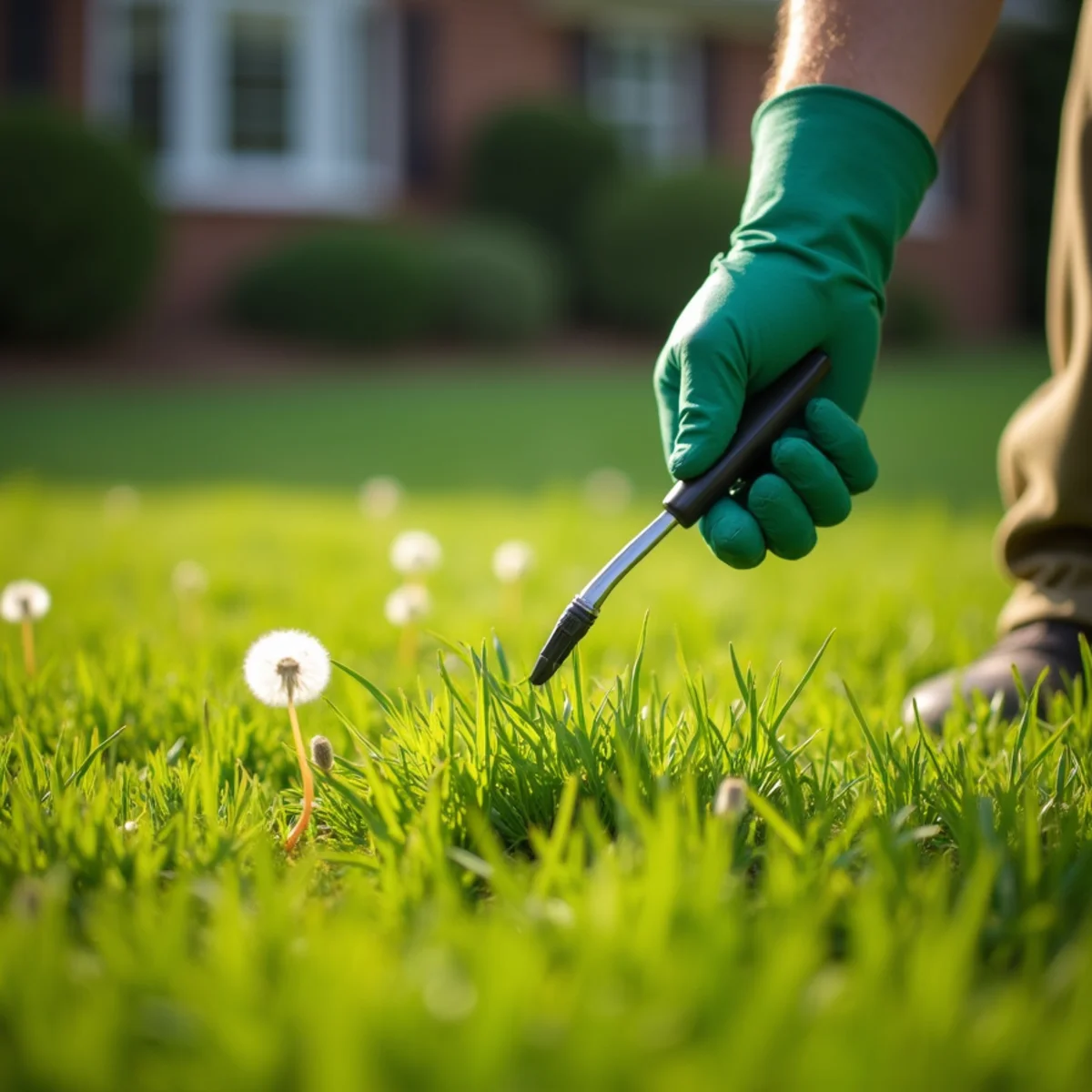
- A handful of easy broadleaf weeds like dandelions in an otherwise healthy lawn.
- Spot-spraying a few weeds rather than treating the whole yard.
- Hand-pulling in beds and along edges.
- You are comfortable reading labels and matching the product to the weed and the grass type, since the wrong herbicide can damage centipede or St. Augustine.
The Catch: Timing Beats Everything
The single most important truth in weed control is that prevention beats cure, and prevention is all about timing. Crabgrass, the summer scourge of NC lawns, is best stopped with a pre-emergent applied in late winter to early spring, before soil temperatures hit the low 50s. Miss that window by two weeks and you spend all summer fighting what a timely application would have prevented.
That timing is where most DIY efforts fall apart. Life gets busy, the window slips, and by the time you notice weeds, the pre-emergent moment is gone.
When to Call a Pro
It is worth hiring out when the problem is bigger than a bag can fix.
- The lawn is more weeds than grass, which means the real fix is thickening the turf, not just spraying.
- You have tough customers like nutsedge, wild violet, or spreading grassy weeds.
- You want the pre-emergent and fertilization timed correctly every round without managing it yourself.
- Store products have not worked, usually a sign of wrong product, wrong timing, or both.
A professional program does more than spray. Our fertilization and weed control service times pre-emergent and post-emergent applications to the calendar and feeds the lawn so it crowds weeds out on its own, which is the real long-term win.
The Best Weed Control Is a Thick Lawn
Here is the secret the products will not tell you: a dense, healthy lawn is the best herbicide there is. Weeds are opportunists that colonize thin, stressed, bare turf. Proper mowing, feeding, and aeration through our lawn care services build a canopy so thick weed seeds never get the light and space to establish.
Serving Fuquay-Varina, Clayton, and Nearby
We run weed-control programs for lawns across the area, from busy family yards in Fuquay-Varina to newer neighborhoods in Clayton, where fresh sod and seed lawns need protection while they thicken up.
Common DIY Mistakes That Backfire
Do-it-yourself weed control goes wrong in a handful of predictable ways, and each one can cost you more than hiring help would have. Avoid these and your own efforts will go much further.
- Using weed-and-feed on the wrong grass. Some combination products damage centipede and St. Augustine, and applying at the wrong time wastes the herbicide and the fertilizer both.
- Spraying in the heat. Many herbicides injure the lawn when applied in high summer temperatures, so read the label's temperature limits.
- Applying pre-emergent after weeds sprout. Pre-emergents only stop seeds from germinating, so once you can see crabgrass, that product will not touch it.
- Treating nutsedge with broadleaf killer. Sedges shrug it off and keep spreading, which is why they need a sedge-specific product.
- Ignoring the mowing height. Scalping the lawn opens the canopy and invites the very weeds you are fighting.
None of these are complicated once you know them, but they are exactly the details that make store-bought programs feel like a waste of money when they fail.
A Simple Weed-Control Timeline for NC Lawns
Because timing beats products in weed control, it helps to see the year as a sequence of windows rather than a react-when-you-see-them scramble. Here is the rhythm that keeps most central NC lawns ahead of the common weeds.
- Late winter, February to early March: apply crabgrass pre-emergent before soil temperatures reach the low 50s. This is the single most timing-sensitive weed task of the year.
- Spring: spot-treat broadleaf weeds like dandelion and clover as they appear, and put down a second pre-emergent round if needed to bridge the season.
- Summer: watch for and treat tough customers like nutsedge with a sedge-specific product, and avoid spraying in high heat, which can injure the lawn.
- Fall: treat winter-annual broadleaf weeds like henbit and chickweed as they germinate, apply a fall pre-emergent, and thicken fescue through overseeding, which is your best long-term weed defense.
- Year-round: mow at the right height and feed properly, because a dense canopy stops far more weeds than any spray ever will.
Miss the late-winter pre-emergent window and no amount of summer spraying fully makes up for it, which is precisely why so many homeowners hand the calendar to a program. The pre-emergent moment is short, it depends on soil temperature rather than a fixed date on the calendar, and once crabgrass is up and visible the preventive product is useless against it. Getting one date right in February saves an entire summer of chasing weeds that never had to sprout.
Win the Weed Battle for Good
If you are tired of the same weeds every year, the fix is timing and a thicker lawn, not another bag from the store. Will Do Lawn Care handles both. Call (323) 606-0255 for a free assessment and a weed-control plan built for your yard.
Related services & areas
Ready for a Yard You Can Be Proud Of?
Get a free, no-obligation quote today. Same-week response on most estimates — call now or request a quote online.
Frequently Asked Questions
Late winter to early spring, before soil temperatures reach the low 50s and crabgrass seeds germinate. Miss that window and you spend the summer fighting crabgrass that a timely application would have prevented.
Usually wrong product, wrong timing, or both. Sedges and grassy weeds need specific products, and pre-emergents only work before weeds sprout. Matching the treatment to the weed and the calendar is where most DIY efforts fall short.
Grow a thick, healthy lawn. Weeds colonize thin, bare, stressed turf, so proper mowing, feeding, and aeration crowd them out naturally. A dense canopy is the most effective weed control there is.