Mulch vs. Pine Straw in North Carolina: Which Belongs in Your Beds?
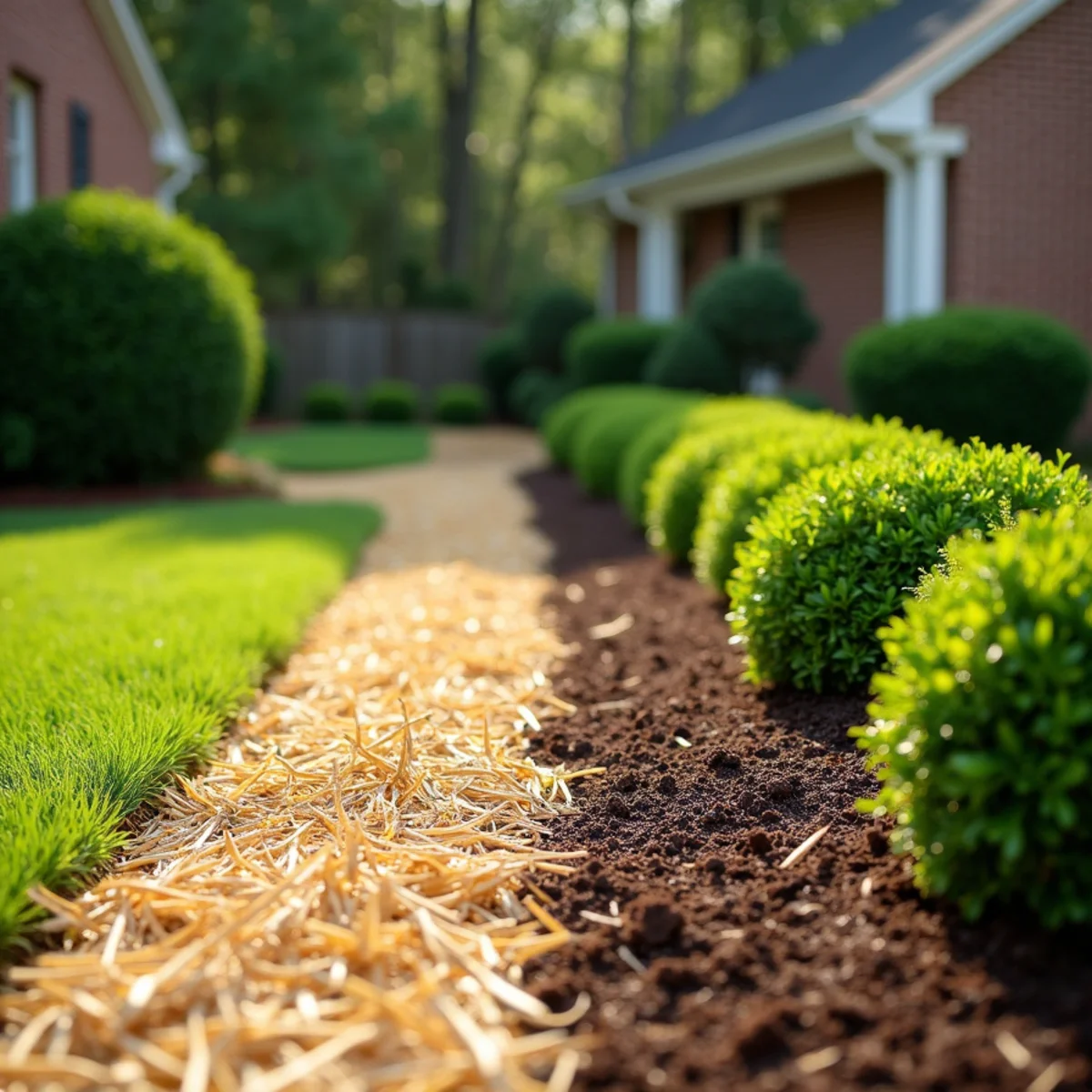
In North Carolina, the great bed-covering debate comes down to two contenders: hardwood mulch and pine straw. Both suppress weeds, hold moisture, and moderate soil temperature. But they look, cost, and behave differently enough that the right pick really does depend on your landscape.
Here is an honest, side-by-side comparison so you can choose with confidence. Neither one is universally better, despite what a neighbor with strong opinions might tell you. The right answer depends on your slope, your plants, your budget, and the look you are after, and plenty of properties end up using both in different areas.
The Case for Pine Straw
Pine straw, the fallen needles of longleaf and loblolly pines, is a quintessential Southern look and abundant right here in NC. It has real advantages.
- Great on slopes. The needles knit together and stay put on grades where mulch washes away in a heavy rain.
- Easy to spread, and it covers a lot of area per bale, which keeps labor down.
- Does not compact, so water and air reach roots freely.
- Acidifies as it breaks down, which suits acid-loving plants like azaleas, camellias, hollies, and pines, all beloved in NC landscapes.
- Natural, uniform Southern look that complements woodland and traditional plantings.
The trade-off: pine straw breaks down faster and typically needs refreshing once or twice a year to keep looking full.
The Case for Hardwood Mulch
Shredded hardwood mulch is the other NC standard, and it brings its own strengths.
- Longer lasting. It decomposes more slowly than pine straw, so it needs refreshing less often.
- Superior weed suppression when laid at a proper depth, because it forms a denser mat.
- Better moisture retention in hot, dry spells.
- Builds soil as it breaks down, adding organic matter that improves stubborn clay over time.
- A crisp, finished look that many homeowners prefer around foundations and formal beds. Color options like brown, black, and red let you match the home.
The trade-off: mulch is heavier to install, can wash off slopes, and should be kept from piling against trunks and siding.
How to Choose for Your Yard
Match the material to the situation rather than picking a universal winner.
Choose Pine Straw When
You have sloped beds, large natural areas under pines, acid-loving shrubs, or you want a lighter, faster, budget-friendly refresh. It is the practical choice for big woodland-style properties.
Choose Mulch When
You want longevity, the strongest weed control, a formal finished look around the foundation, or you are trying to build organic matter into heavy clay soil over time.
A Note on Doing It Right
Whichever you choose, depth and technique matter. Too little does not suppress weeds, too much suffocates roots, and piling either material into a volcano against a tree trunk invites rot and pests. Our mulch and pine straw installation crews lay the right depth, keep material off trunks and siding, and edge the beds crisply for a clean finish that lasts.
Refreshing beds is also the perfect moment to reassess the whole planting. Our landscaping services can reshape beds, correct drainage, and add plants while the beds are open.
Serving Southern Pines, Carthage, and the Sandhills
In pine country, both materials are close at hand. We install fresh beds across the region, from the pine-shaded landscapes of Southern Pines to properties around Carthage, matching the material to each yard's slope, plants, and style.
How Much You Need and When to Refresh
Both materials work best at the right depth, and more is not better. For hardwood mulch, aim for roughly two to three inches, deep enough to block light and hold moisture but not so deep that it suffocates roots. Pine straw goes on a bit thicker because it settles and compresses, so plan for about three inches fluffed out.
Timing the refresh is straightforward once you know the pattern. Most homeowners freshen beds in early spring to set up the year, and many do a lighter fall touch-up. The tell that it is time is simple: when the color has faded and you can see soil or last year's material breaking down, the bed has lost its weed barrier and its finished look at the same time.
Prep Before You Cover
Do not just pile new material over old, tired beds. The best results come from pulling existing weeds, crisply re-cutting the bed edges, and only then laying fresh mulch or straw. That edge is what makes a bed read as intentional rather than overgrown, and it keeps the material where you want it instead of spilling into the lawn.
Comparing the Real Cost Over Time
On the pallet or in the bale, the sticker price is only half the story. What a bed actually costs you comes down to how often the material needs replacing and how much labor it takes to install, and here the two materials trade places depending on how you look at it.
- Pine straw is usually cheaper per application and faster to spread, but it breaks down quickly and typically needs refreshing once or twice a year to stay full.
- Hardwood mulch costs more up front and is heavier to install, but it decomposes slowly and often lasts a full year, so you buy and spread it less often.
- Large natural areas under pines tend to favor straw on both cost and labor, while smaller formal beds around a foundation favor mulch's longevity and finished look.
- Slope tips the math toward straw regardless, since mulch that washes away in a heavy rain has to be replaced early anyway.
Over several years the two often land closer than the per-bale price suggests, which is why the decision usually comes down to appearance, slope, and the plants rather than cost alone. Plenty of properties settle on both: pine straw across the large wooded areas and hardwood mulch in the tidy, high-visibility beds by the entrance and foundation.
Avoid the Mulch Volcano
Whichever you choose, the most damaging mistake is piling material into a cone against a tree trunk or shrub base, the so-called mulch volcano. Trapped moisture against the bark invites rot, disease, and pests, and can slowly girdle and kill the very plant you meant to protect. Keep mulch and pine straw pulled back a few inches from trunks and away from siding, laid flat at an even depth rather than mounded up around anything.
Refresh Your Beds This Season
Fresh mulch or pine straw is the fastest way to make a whole property look cared for. Will Do Lawn Care will recommend the right material for your beds and install it cleanly. Call (323) 606-0255 for a free quote.
Related services & areas
Ready for a Yard You Can Be Proud Of?
Get a free, no-obligation quote today. Same-week response on most estimates — call now or request a quote online.
Frequently Asked Questions
Pine straw. The needles interlock and stay in place on grades where hardwood mulch tends to wash away in heavy rain. On flat, formal beds, mulch's longevity and denser weed barrier often win out.
Hardwood mulch. It decomposes more slowly and needs refreshing less often, typically once a year. Pine straw breaks down faster and usually needs a refresh once or twice a season to stay looking full.
Yes. As pine straw breaks down it gently acidifies the soil, which suits azaleas, camellias, hollies, and other acid-loving plants common in NC landscapes. It is a natural fit under and around them.