What to Do When a Tree Falls in Your Yard After a North Carolina Storm
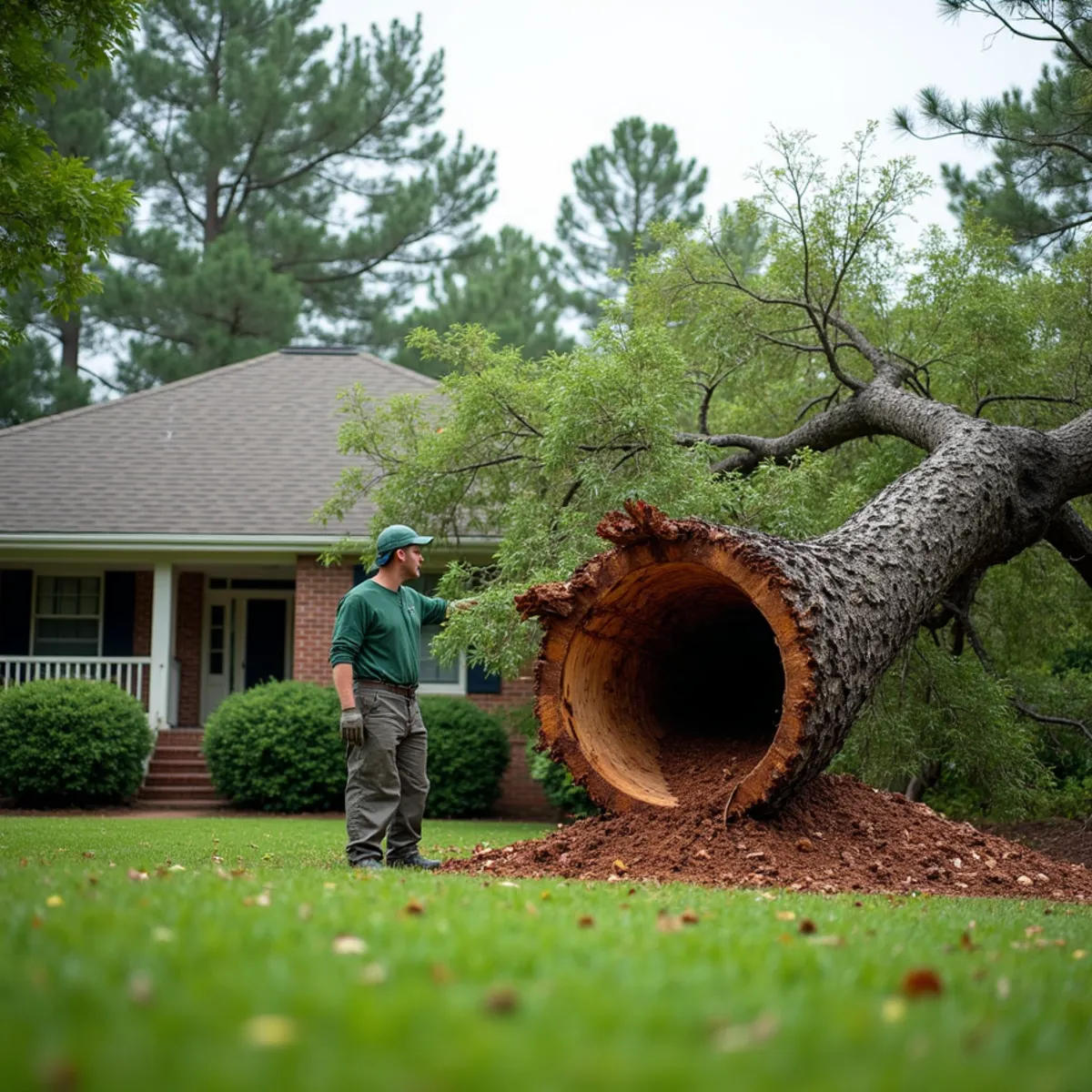
The wind quiets down, you step outside, and there it is: a mature oak or pine stretched across your lawn, maybe leaning on the fence or worse. In central and eastern North Carolina, saturated red clay and sandy soils lose their grip fast during a summer thunderstorm or a fall hurricane, and even healthy trees come down.
Before you touch a single limb, slow down. The order you do things in matters for your safety and your insurance claim. Here is exactly how to handle it.
First: Make Sure Everyone Is Safe
Keep people and pets well back from the tree and anything it is touching. A trunk that looks settled can shift or roll without warning, and branches under tension can snap back with enough force to injure.
- Look up before you look down. A tree that is partly held up by another tree, a roofline, or wires is called a hung-up tree, and it is the single most dangerous situation on this list.
- Assume every downed or sagging line is live. Stay at least 30 feet away and call your utility, then 911 if a line is arcing or burning.
- If the tree hit the house and you smell gas or hear hissing, leave the home and call your gas provider from a safe distance.
Second: Document Everything for Insurance
Before any cleanup begins, photograph the scene from several angles. Capture the root ball, the damage to structures, fences, or vehicles, and any wide shots that show the whole picture.
Take these photos even if you plan to clear a small tree yourself. If you later discover roof or foundation damage, that early documentation supports your claim. We cover the money side in detail in our guide on whether homeowners insurance covers fallen tree removal in North Carolina.
Third: Know What You Should Not DIY
We are all for a capable homeowner clearing small, loose branches. But a chainsaw plus a tree under tension is how people end up in the emergency room. Call a professional for our emergency fallen-tree and limb removal when any of the following is true:
- The tree is touching a structure, vehicle, fence, or any wire.
- The trunk is larger than about eight inches across.
- The tree is hung up or leaning against something rather than lying flat.
- There is any tension or compression in the wood, which is nearly always the case with a whole tree.
- You would need to work overhead or on a slope or wet ground.
Why Tension Is So Dangerous
When a trunk falls across a fixed point, the top fibers stretch and the bottom fibers compress. Cut in the wrong place and the log springs, kicks, or rolls in a fraction of a second. Trained crews read the load, relieve it in stages, and keep an escape path. That judgment is what you are really paying for.
Fourth: Handle the Debris the Smart Way
Once the tree is down and cut into safe sections, you are left with a yard full of wood, brush, and shredded turf. A single mature hardwood can produce several truckloads of material. Our storm debris cleanup crews haul the wood, chip the brush, rake out the smaller litter, and leave the lawn ready to recover.
Do not bury the problem by pushing debris into a wooded edge or ditch. In many NC towns that creates a code issue, and piled wood invites termites and snakes right next to the house.
Fifth: Assess the Lawn and Soil Underneath
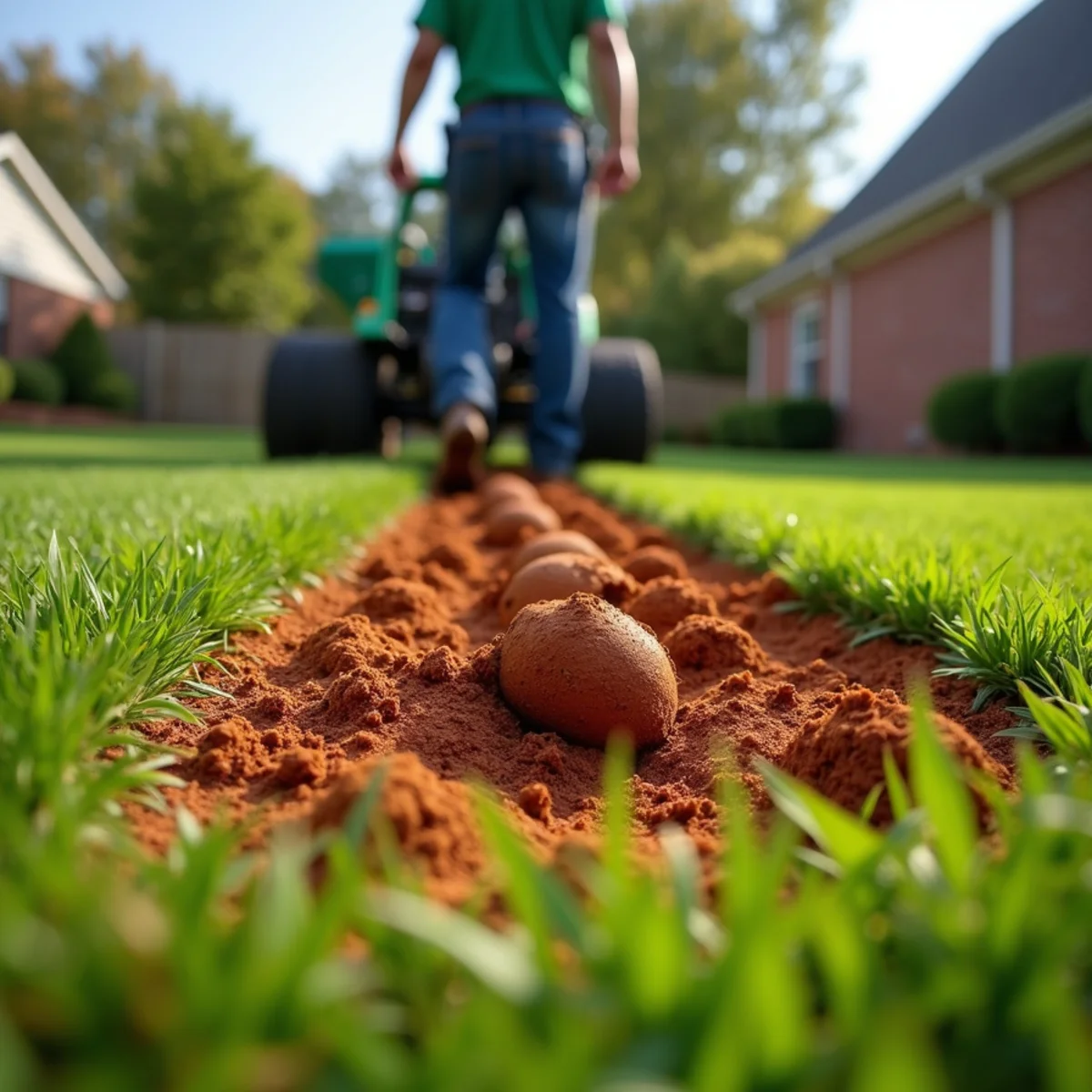
A fallen tree does two kinds of damage to turf: the crushing weight and the crater left when the root plate tears up. Once the wood is gone, we grade the disturbed soil, work in topsoil where the root ball lifted, and reseed or sod the scar so it blends back in over a season.
Homeowners across our service area, from storm-prone Goldsboro to our home base in Angier, call us the morning after a storm for exactly this sequence: clear it safely, haul it, then heal the lawn.
What About the Stump and the Long-Term Lawn?
Once the trunk and root ball are gone, you are usually left with a stump or a torn crater where the roots pulled free. Grinding the stump below grade lets you reclaim that area for turf, and it removes a decay site that would otherwise attract carpenter ants and fungi over the next few years.
There is also a hidden opportunity here. Losing a big shade tree suddenly floods a previously shaded lawn with sunlight, which changes what grass will thrive there. A spot that struggled as thin, shaded fescue may now be perfect for a sun-loving warm-season grass or a fresh, full-sun fescue blend. When we repair the scar, we account for that new light rather than simply patching in whatever was there before, so the recovered area actually holds up long term.
Which Trees Are Most Likely to Fall Here
Across central and eastern North Carolina, a handful of trees and situations account for most of the calls we get after a storm. Knowing them helps you spot a hazard before the next system rolls through, when a planned removal is far cheaper and safer than the emergency version.
- Shallow-rooted pines, especially loblolly, catch the wind like a sail and topple once saturated red clay loosens its grip on the root plate.
- Water oaks and willow oaks, common yard and street trees here, grow fast but hold weak wood and tend to drop large limbs or split at tight, V-shaped forks.
- Any tree with a lean that has increased recently, soil heaving or a root plate lifting on one side, or a hollow trunk that sounds dull when you tap it.
- Trees carrying large dead limbs in the canopy or showing fungal conks at the base, both signs of internal decay.
- Trees whose roots were cut or whose soil was compacted by recent construction, which silently weakens their anchorage for years.
The pattern we see most is a healthy-looking canopy on a tree that is failing underground. Once the clay around the roots is fully saturated by days of rain, even a moderate gust can lever the whole plate out of the ground. That is why so many trees come down not at the peak of a hurricane but on the soggy back side of it, or in an ordinary thunderstorm days later. If you have a big tree leaning toward the house or showing these warning signs, dealing with it on a calm day also removes the neglect argument an insurer might use to deny a future claim.
Get Help Fast
A downed tree is not the time to improvise with a rental chainsaw. Will Do Lawn Care is a local, family-owned crew that answers the phone after storms and clears yards safely, then restores the lawn underneath. Call us for a free assessment at (323) 606-0255 and we will get your property back to normal.
Related services & areas
Ready for a Yard You Can Be Proud Of?
Get a free, no-obligation quote today. Same-week response on most estimates — call now or request a quote online.
Frequently Asked Questions
Photograph the damage first, then call your insurer before major cleanup when a structure is involved. If the tree only fell on the lawn, document it, remove the immediate hazard, and keep receipts. Our insurance guide walks through the coverage details.
After significant storms we prioritize hazards touching homes, driveways, and access points. Call (323) 606-0255 and we will give you an honest response window based on current storm volume in your area.
Yes. Once the wood is hauled off, we grade the disturbed area, add topsoil, and reseed or sod the scar so the lawn recovers evenly.